


Your child's photo doesn't have to be revealing to be misused
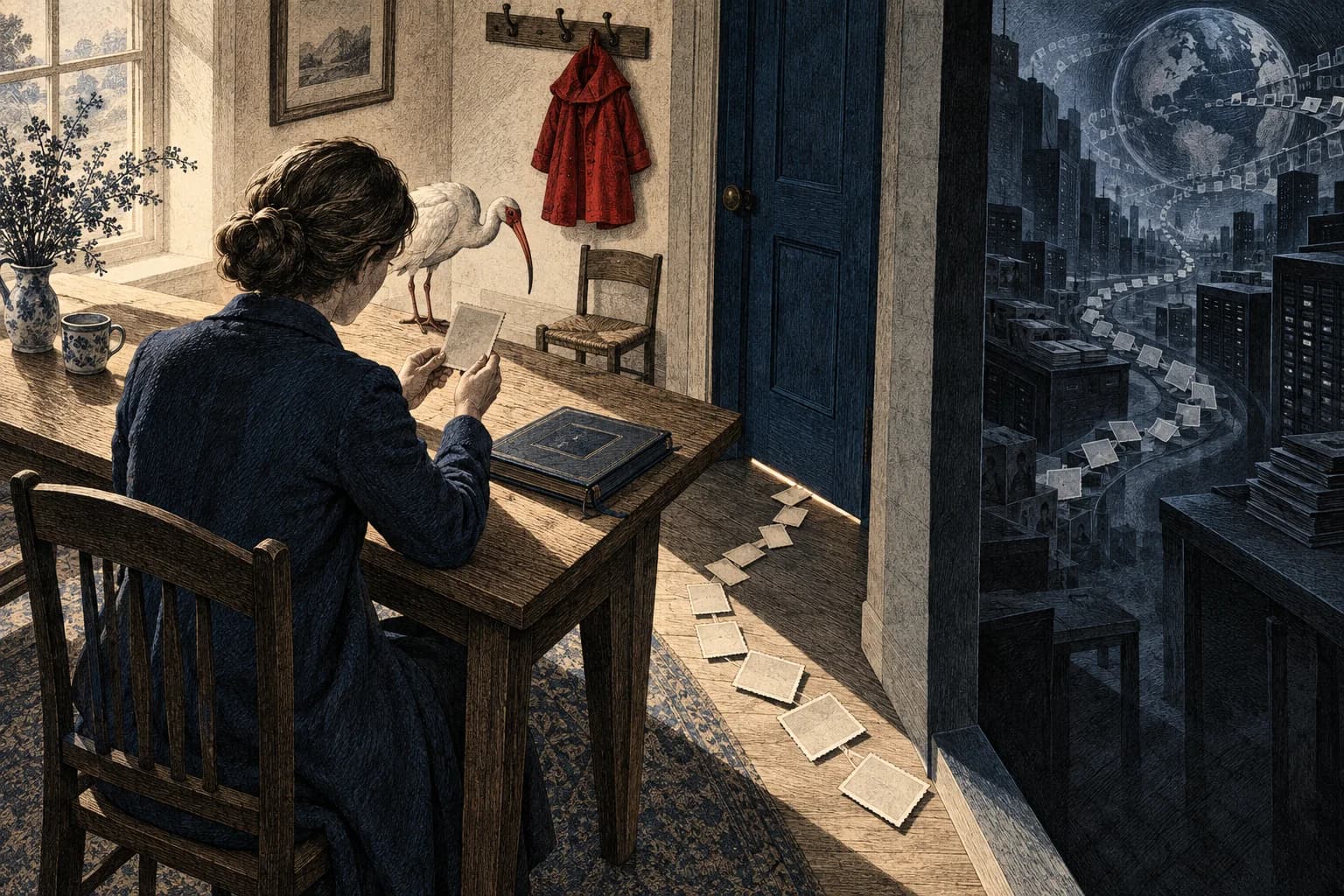
Our children are in our public work. When Miriam and I share Baby Acrobatics videos, we're showing other parents how we move and play with them. You can see that on our Instagram. We cover their faces and keep their names and other personal details private, but they are still there.
That's an uncomfortable part of sharing anything publicly. We know why we made the video. We don't get to choose why somebody else saves it.
A US court ruling in August 2026 brought that worry back into the news. It concerned private possession of obscene, wholly synthetic sexual images that couldn't be linked to an actual child. It wasn't a new Supreme Court ruling, or blanket permission to turn a real child's photograph into sexual material. But the problem of someone misusing an ordinary family photo began long before AI.
If something has already happened, go straight to the reporting steps.
The picture can stay the same while its audience changes
In 2016, Australia's Children's eSafety Commissioner described what his investigators were finding. Photos taken from open social accounts and newsletters were turning up in collections shared by people with a sexual interest in children. Some showed children doing homework or playing in a park. The pictures were ordinary; the comments and the people collecting them gave them another use. eSafety Commissioner's interview
There didn't have to be anything revealing in the photograph. Nobody had to edit it, either. A parent could look at the original post and see exactly what they'd always seen, without knowing about the copy somewhere else.
I find that harder to sit with than a warning about a particular app. It means there isn't a filter that makes a public family photo impossible to misuse. Taking out a name or covering a face can leave less information available, but it can't decide what another person does with the rest of the picture.
That doesn't tell us the chance of this happening to any particular family. It does explain why “there's nothing inappropriate in the photo” only answers part of the question. We also need to think about who can take a copy, and how much that copy tells them about the child.
What the August 2026 court ruling actually covered
On 25 August, the US Court of Appeals for the Seventh Circuit decided United States v. Anderegg. It upheld dismissal of one federal charge concerning his possession of obscene material at home. Prosecutors had conceded that the images at issue neither depicted nor could be linked to an actual child.
The court applied older Supreme Court decisions about private possession and fictional depictions. It did not strike down the entire law. Charges involving production, distribution and transfer to a minor remained in the case.
The opinion also distinguished altered pictures of real children. So the situation a parent is worried about when somebody takes their child's photo is different from the wholly synthetic images covered by this particular possession ruling. It doesn't give someone blanket permission to do that. Seventh Circuit ruling
If you've seen this described as “the Supreme Court legalized AI-generated CSAM,” that leaves out both the court and the limits of its decision. CSAM means child sexual abuse material. This was a specific federal appeal, not an answer to every image or every state's law.
AI gives an ordinary photo another possible use
AI tools can also be used to manufacture an image that appears to show the child in a situation that never happened. The original can be an ordinary family photograph, taken without any thought of it ending up like this.
The FBI warned about this in June 2023. It had received reports, including from minors, of ordinary photos and videos being manipulated into sexual images and used for harassment or blackmail. Material from social media and other public posts was among the sources. FBI warning
A child can know perfectly well that the image is fake and still be frightened of who will see it. Explaining that it isn't real doesn't remove the threat, or the humiliation of having other people pass it around.
And the person responsible may be someone they know. In August 2026, the US National Center for Missing & Exploited Children, or NCMEC, reported growing numbers of school incidents, often involving classmates aged 14–17. Its advice includes telling children not to save or forward these images, and to involve a trusted adult. NCMEC's advice for parents
That makes this a conversation for schools as well as families. Alongside photo-consent choices, ask who a child should approach if an abusive image appears in a group chat. They need a person who will help, and a school response that doesn't require them to circulate the picture again to be believed.
What covering a face can actually do
We built Blur Kids' Faces because we wanted a way to share movement without publishing our children's clear faces. A solid cover replaces the pixels underneath it when you save the edited copy. Blur and mosaic keep some facial information. All of them depend on covering the right area throughout the video. How our covers work
A face cover cannot make a photograph abuse-proof. Someone could misuse the rest of the image, identify the child from another post, or invent details that weren't visible. We haven't established that our tool prevents AI image abuse, and I wouldn't want a parent to share something on that assumption.
So the first decision still comes before editing. Does this need to be public? A picture for grandparents can go to a smaller family audience. A school can show an activity without publishing every child's face and name. A public demonstration can sometimes be filmed from an angle that gives less away.
Privately shared pictures can still be copied. The advantage is choosing fewer recipients, people you can actually speak to about not forwarding or uploading the photos. That is a useful choice even though it isn't complete control.
If you find a photo or your child gets a threat
Start with your child. Tell them they aren't in trouble for asking for help, even if they sent a picture themselves or have already replied to the person threatening them. The responsibility belongs to the person abusing them.
Then choose the response that matches what you found.
| What happened | Where to start |
|---|---|
| A photo was reposted without permission, without a sexualized context | Follow the photo-removal steps. Identify the account or website holding that copy and request removal. |
| A child's image appears in sexual material, including an AI fake, or an ordinary photo is shared with sexualized comments | Use the platform's child-exploitation reporting option and report to NCMEC's CyberTipline. You don't need to settle its legal classification yourself before reporting a concern. |
| Someone demands money or more images | Don't pay or send more images. Get help from police and CyberTipline. Keep the messages, account names and links needed to report the threat; don't forward abusive images. Paying doesn't guarantee the person will stop. FBI advice |
| Another pupil is involved | Contact the school's safeguarding lead alongside the platform and relevant authorities. Ask how they will support your child and address circulation among pupils. |
Record URLs, usernames, dates and report numbers. Don't download, screenshot or forward sexual images of a child to build an evidence folder. Give the reporting service the information you have and follow its instructions. You don't need to visit abusive sites looking for more copies. For immediate danger, contact local emergency services.
Where Take It Down can help
NCMEC also directs victims of AI-generated explicit images to its Take It Down service. The service covers sexual images of someone under 18, including childhood images of people who are now adults. If the image is already on your device, it can create a digital fingerprint there without uploading the image itself. Participating platforms can use that fingerprint to look for matches on their public or unencrypted services. How Take It Down works
It cannot erase every copy from the internet or somebody's private storage. A fingerprint of the original family photo won't automatically match a different, fabricated image.
If you don't have the abusive image, don't download it or ask someone to send it just to use the service. Report through CyberTipline instead. NCMEC gives that instruction explicitly in its FAQ.
Keep a way back to you open
For the next family photo, decide who actually needs to see it before deciding how to edit it. And as your child grows, make sure they know they can come to you if someone uses a picture against them. A threat is much harder to face when they're also afraid of your reaction.
Sources reviewed 8 September 2026.