


Why I don't want that much attention on my kids' faces
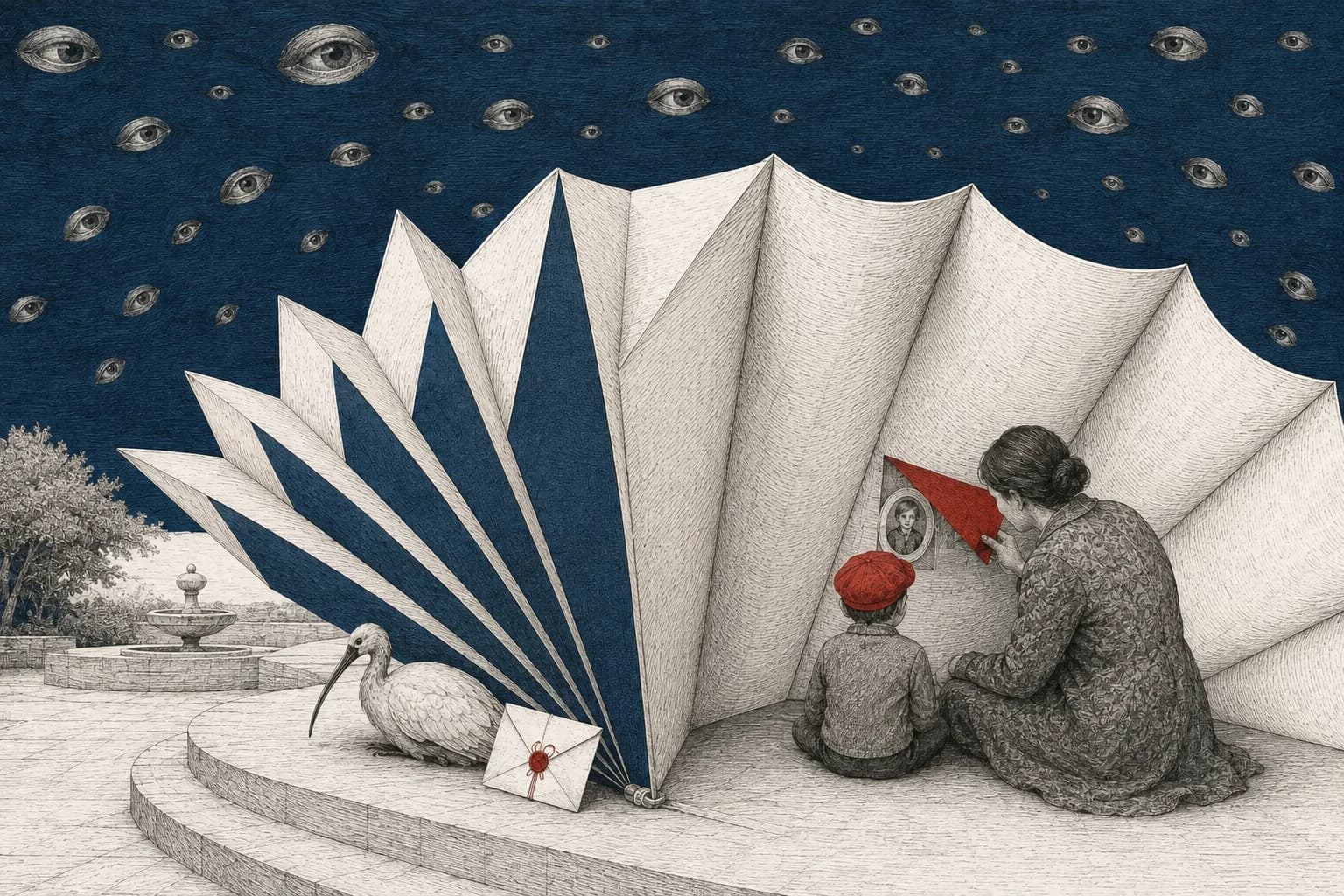
If you've seen Baby Acrobatics, you've probably seen me playing with my children. Holding them, moving them around, showing parents how to do this with their own babies. My wife Miriam and I built a whole program around it, so our children are in our public work quite a lot.
And we've always covered their faces.
Which needs a bit of explaining, because they're right there in the video. You can see us together. This is on Instagram, YouTube and Facebook, we're actively putting it out into the world, and at the same time we're keeping their faces, their names and a lot of their lives private.
Someone can learn how to move with their baby from that video. They don't need our children's names to do it.
But privacy isn't the whole explanation...
There's an esoteric part to this too, because energy matters, even if that's harder to explain. What does it mean to have that many people looking at your child?
And that's a part I also care about... I honestly don't know to which extent (but I do) because it leads back to a very ordinary decision about what you do with the next picture on your phone.
A lifetime of being seen, then one upload
Across my online work, the views add up to hundreds of millions.
However Instagram and these platforms count views... but there's a chance hundred million different people have laid their eyes upon my children... so it's a lot of looking.
Someone you've never met has seen you with your children. They can watch again tomorrow, show someone else, save a copy, come back to it years later. You don't know them, but some small part of your family has become familiar to them.
x ~100,000,000
And among the people watching are people who disagree with my public work.
The video doesn't only travel to people who understand what we're doing and agree with me (and wish good upon us).
Now go back three hundred years.
People could see you in the street, at work, at a market. A stranger might remember your face. But they couldn't take a replayable video of your child home with them and pass it on to someone on the other side of the world.
That difference is easy to lose when all you're doing is pressing Post. You're still at home with the same child. On the other end, you have no idea who's there.
So what about the attention itself? People were arguing about that long before there was a camera involved.
What people meant by the evil eye
There's a dinner conversation about this in Plutarch, a Greek writer living under the Roman Empire roughly two thousand years ago. The guests start discussing the evil eye and most of them laugh it off. But their host thinks there are too many accounts of it to dismiss the whole thing just because nobody can explain how it works.
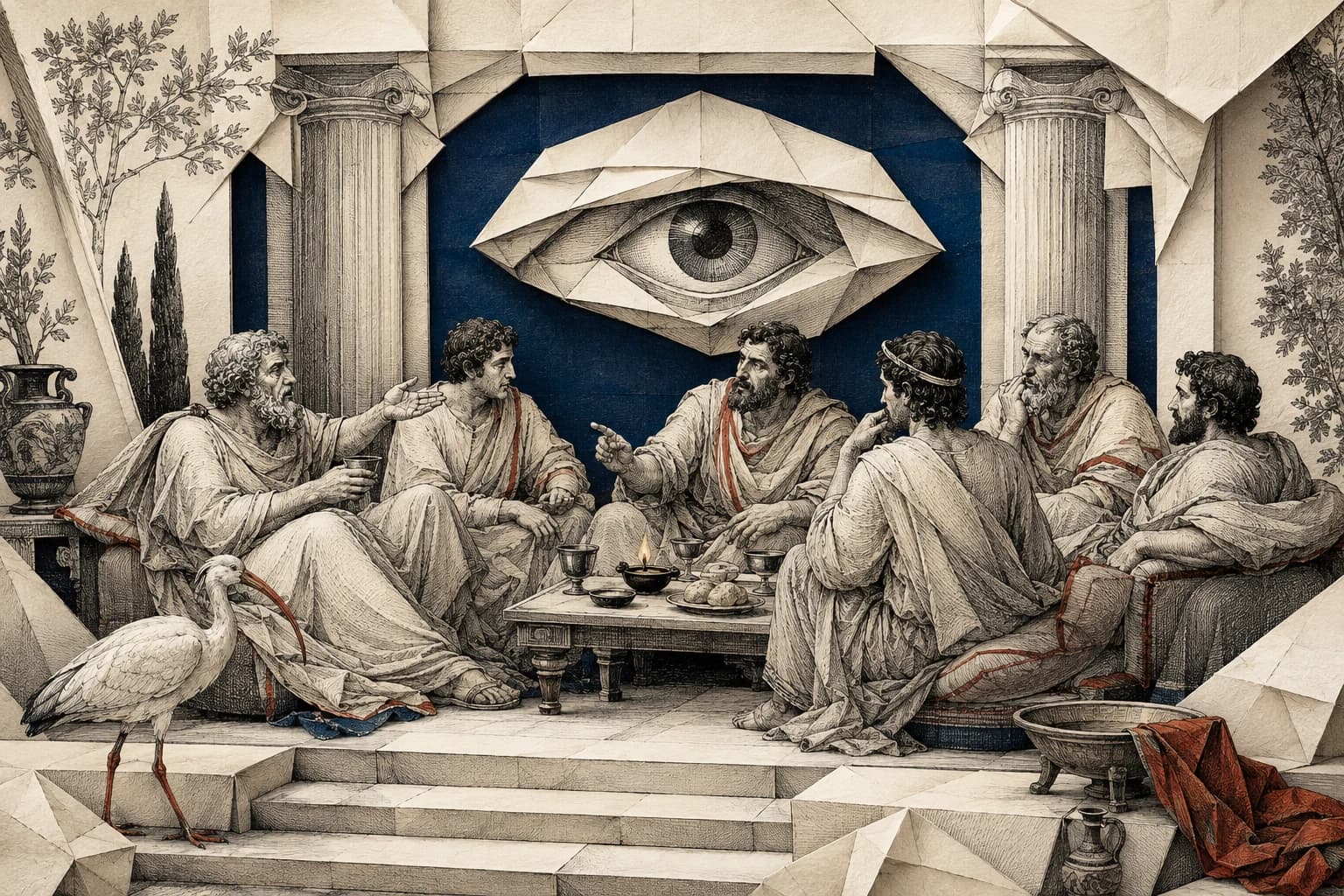
He knows of children harmed by a look, he tells them. Children are vulnerable, their bodies less able to withstand it than an adult's, and he doesn't see why these accounts should be dismissed when there are so many other things they accept without knowing how they work. Someone has looked at a child and the child has become ill. How does their inability to explain it make it impossible?
Plutarch isn't ready to laugh it off either. Your voice reaches another person without you touching them, and so does your breath. Perhaps something leaves through your eyes as well. Think of two people falling in love, he says, and how much can pass between them in a look. Neither has to touch the other to feel it.
And envy can work on your body too, he argues. It can make you pale, eat away at you, change the way you look. If it can do all that to the person feeling it, perhaps their eyes carry some of it outward, toward the person whose good fortune they can't bear.
Then another guest asks how any of that explains a father harming his own child. Some mothers, he says, won't let their own children's fathers look at them for too long, because they believe even a father can give his child the evil eye. These are people who love the children. If envy is what makes a look dangerous, where is the envy supposed to be coming from?
Plutarch, who admits he has already had rather a lot to drink, doesn't back down. A person can become so used to envy that it acts before they have chosen anything, he argues, just as someone with a bad temper can turn on the people closest to them. Loving the child wouldn't necessarily stop it. They might do harm without ever wanting to. Plutarch, Table Talk
Knowing someone loved your child wouldn't settle that worry. They might bring something with their attention that they didn't mean to bring. So what could you put between the child and that look, while still letting people near them?
Something for the gaze to land on
People carried little things meant to stand between them and that gaze. An amulet could be worn close to the body, a small protection you could take with you into a world full of other people's eyes.
And some of these were much stranger than a little bead on a bracelet. On a Byzantine pendant from the fifth or sixth century, an eye is surrounded by a lion, a snake, a scorpion, a stork and spears, all attacking it. The person wearing it carried a picture of the very thing they feared, made vulnerable in turn. Even the eye could be hurt. Walters Art Museum
Other charms were meant to catch the gaze before it reached the wearer. In a glass amulet from Hebron, colored rings surround a black pupil. This eye was meant to draw the harmful look toward itself, giving it somewhere else to land. So if you've wondered why someone would wear an eye to protect against an eye... that was one of the explanations.
A silver creature from Naples has a horse's front half, a fish's tail and five little bells hanging from its body. It would be jingled to draw a potentially harmful gaze away from a baby. You can almost hear the little interruption as the bells move and draw the visitor's attention to the object. Pitt Rivers Museum
When a compliment needs a blessing
In an old Islamic story, Sahl ibn Hunayf is bathing when another man, Amir ibn Rabia, comments on how beautiful his skin is. Sahl immediately becomes ill, badly enough that he cannot continue with the group. When Muhammad hears what happened, he reproaches Amir for not asking for a blessing on the man he admired.
After a ritual washing, Sahl recovers and rejoins the others. Amir's words had been a compliment, yet he was the one Muhammad reproached. His admiration needed a blessing to go with it, a wish for the other person to be well. Muwatta Malik
Muhammad also prays for his own grandsons, al-Hasan and al-Husayn, asking God to protect them from a harmful eye. As he does, he recalls Abraham praying for his sons. A prayer for children reaches back through the generations, carrying the same wish to keep them safe. Sahih al-Bukhari
This didn't stay in the ancient world
In Messinía, in southwestern Greece, the fear has a familiar name, máti, simply “eye.” It can come from envy or admiration, people there say, and a newborn in the first forty days is thought especially vulnerable. The explanation changes from family to family. Some speak of the Devil, others of energy, but the worry can begin with the same ordinary thing, someone looking admiringly at a child. Máti in Greece
In Türkiye, a newborn may be given a blue nazar bead for protection from all the admiration a baby attracts. The child is beautiful, people want to look, and the little eye is there to meet whatever comes with that attention. GoTürkiye
A baby on a screen can receive that attention from people the family will never meet. A stranger doesn't have to visit your house or meet you in the street to spend time looking at your child. They can be alone with their phone, somewhere you will never go, watching a moment you shared months ago.
What does that mean through a screen?
Could some sort of collective consciousness be involved? Some higher resonance, something happening when that many people see a face that we don't really understand?
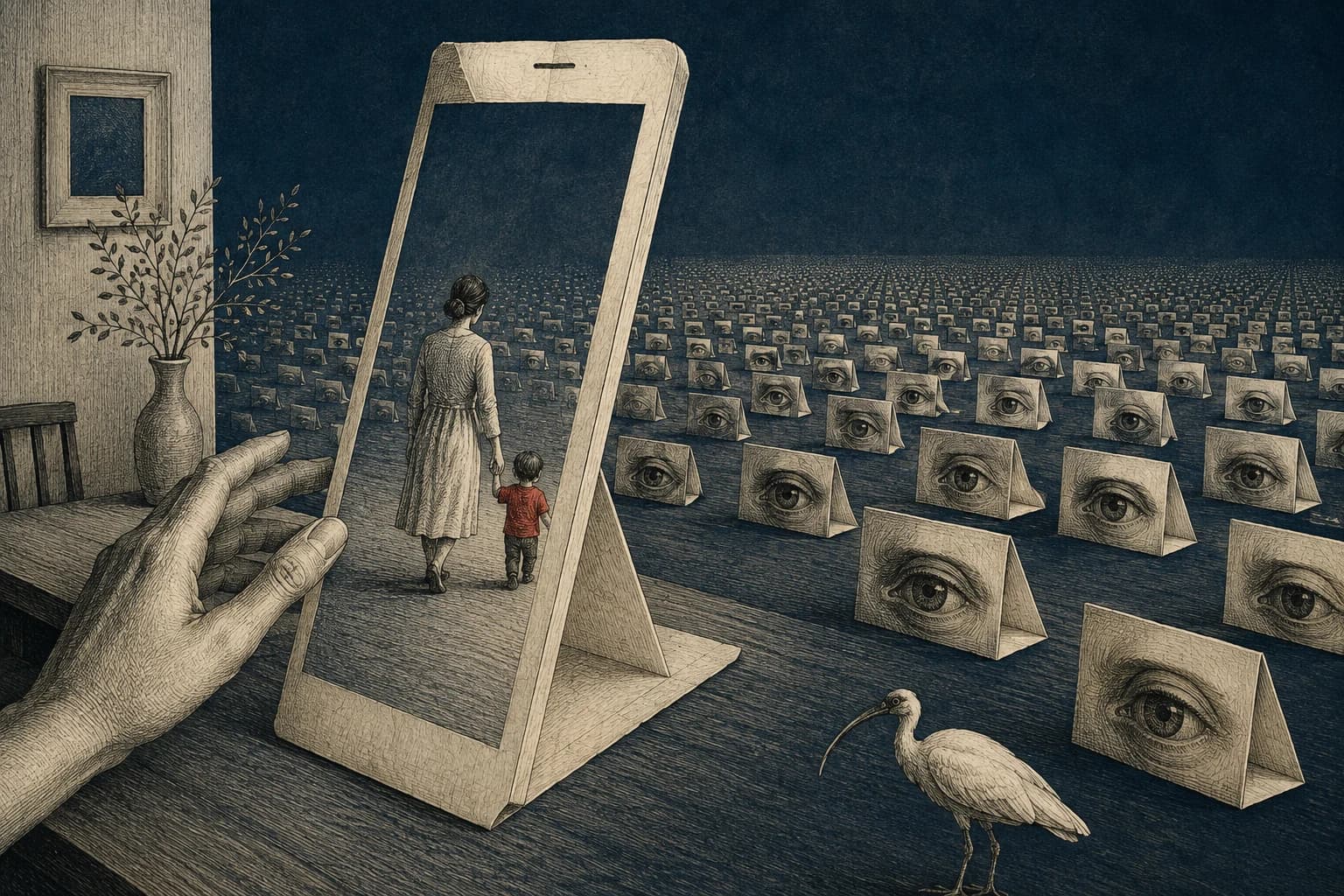
That's the question behind my hesitation. And my response to it is still i dont want to mess with that.
You can leave that question open and still be particular about who gets the picture. Keeping it private doesn't have to mean keeping it from the people you love.
Keeping a picture doesn't mean making it public
At Docker River, Marcia Reid and her family describe showing a baby photographs of grandparents, helping the child learn who the family is. Here, looking at the pictures brings the generations closer. They want the baby to see those faces. Aṟa Irititja family stories
The Aṟa Irititja archive was developed at the request of Ngaanyatjarra, Pitjantjatjara and Yankunytjatjara communities to preserve their history and make it accessible to them, with cultural restrictions built into how the material could be accessed. Keeping the photographs and controlling access were part of the same project. Aṟa Irititja archive
A photo of your child with their grandparents can stay with the family. You can keep the clear faces, the expressions, everything you wanted to remember, without making that same copy available to whoever happens to come across your account.
What to do with the next picture
For us, the public videos show the movement and play.
And their faces stay covered, and the names and other life details stay private. That's the line we've kept while making Baby Acrobatics... and sharing anything about them online, really.
If you're deciding where your own line goes, open the picture you were about to share and think about who you actually wanted to show it to. If it's the grandparents, send it to them or put it in a private family album. They can have the photograph without your public account having it too.
And tell them whether they can pass it on. "We're keeping their faces out of public posts. Please ask us before sharing pictures of them."
Otherwise you've made a decision about the audience that the next person doesn't know about. There are ways to have that conversation if it's already become awkward.
If the picture does have a reason to be public, make a separate copy for that. You can cover the face, then check what else you're giving away. A name spoken in a video or a school badge still tells people something about the child; this is what to check beyond the face.
That's how our children can be in the videos and still have parts of their lives we don't put there. You can watch us play, take something from it, go and try it with your own baby. You don't need to know everything about ours.
Sources reviewed 6 September 2026.