Folded Lives · Privacy stories & illustrations
A private life.
A world that keeps a copy.
A message hidden under wax. A letter folded shut. A photograph that travels further than the person who took it expected.
The things we want to share have always needed boundaries. This page follows a few moments in the history of hiding, sharing and watching. Alongside them are the illustrations from our privacy guide, with notes on what each scene is there to explain.
All 20 illustrations were generated with AI. About the images.
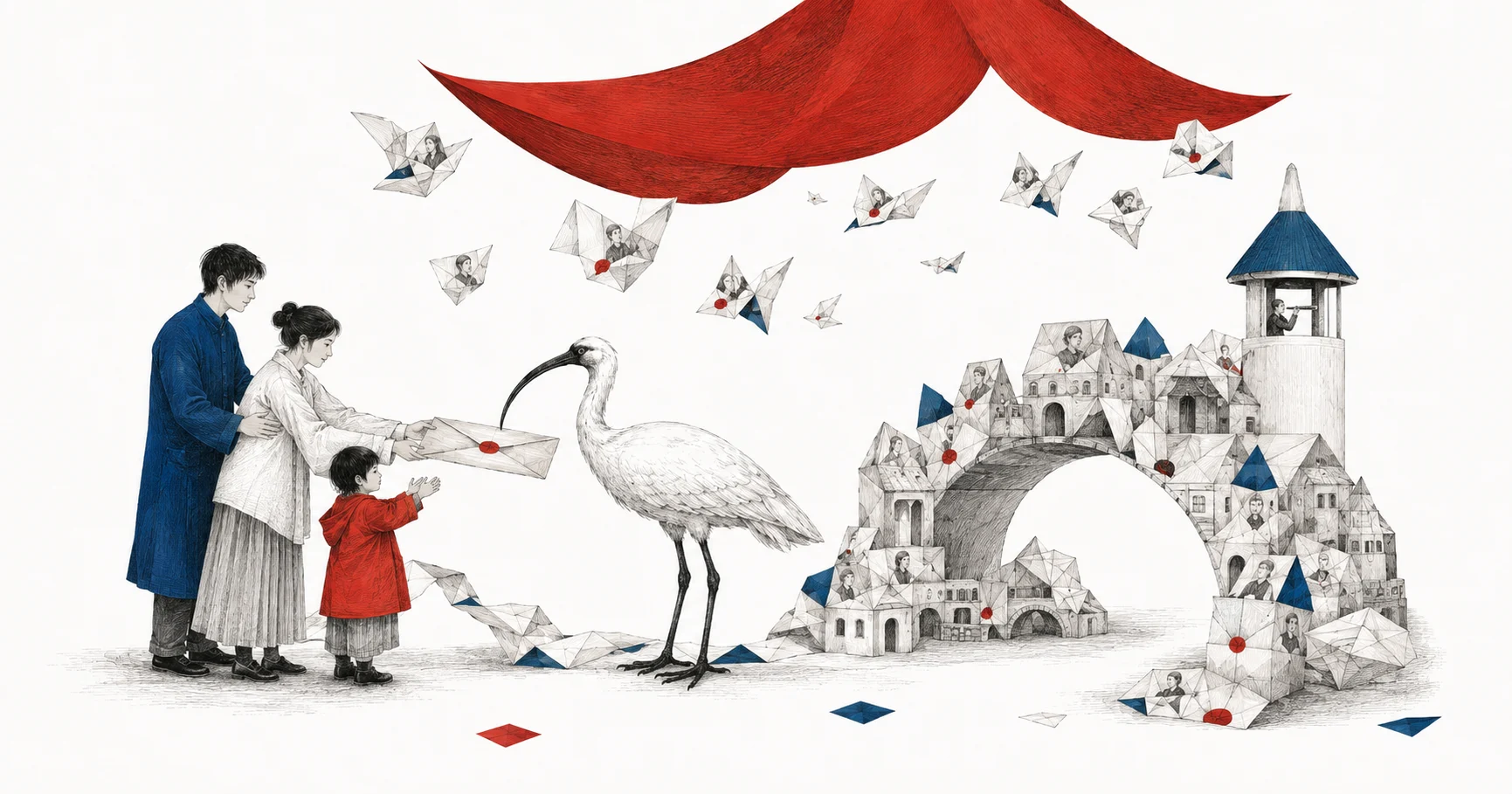
A family passes a letter towards a bird while more letters travel through a town. It introduces the guide’s recurring question: where does a picture go after we share it?
015th century BCEA classical account
The tablet looked empty.
Herodotus tells a story about a warning that needed to travel without looking like a warning. Demaratus, living in Persia, wanted to tell Sparta about Xerxes's preparations for war. He scraped the wax from a writing tablet, wrote on the wood underneath, then covered the words with wax again.
The tablet arrived apparently blank. Gorgo suggested removing the wax. There was the message. Herodotus presents this as a story he had been told; we have his account, rather than independent proof of the journey. Read the passage in the Histories, 7.239.
I like the very ordinary distinction inside this extraordinary story. Someone was meant to read the words. Just not everyone who handled the object. Concealing the writing changed who could easily see it; the writing itself was still there.
About the illustration
The letters and covers in these illustrations stand for choices that now sit inside sharing menus. Who is this for? What can another person still uncover? The scenes give those questions an ordinary object to look at.
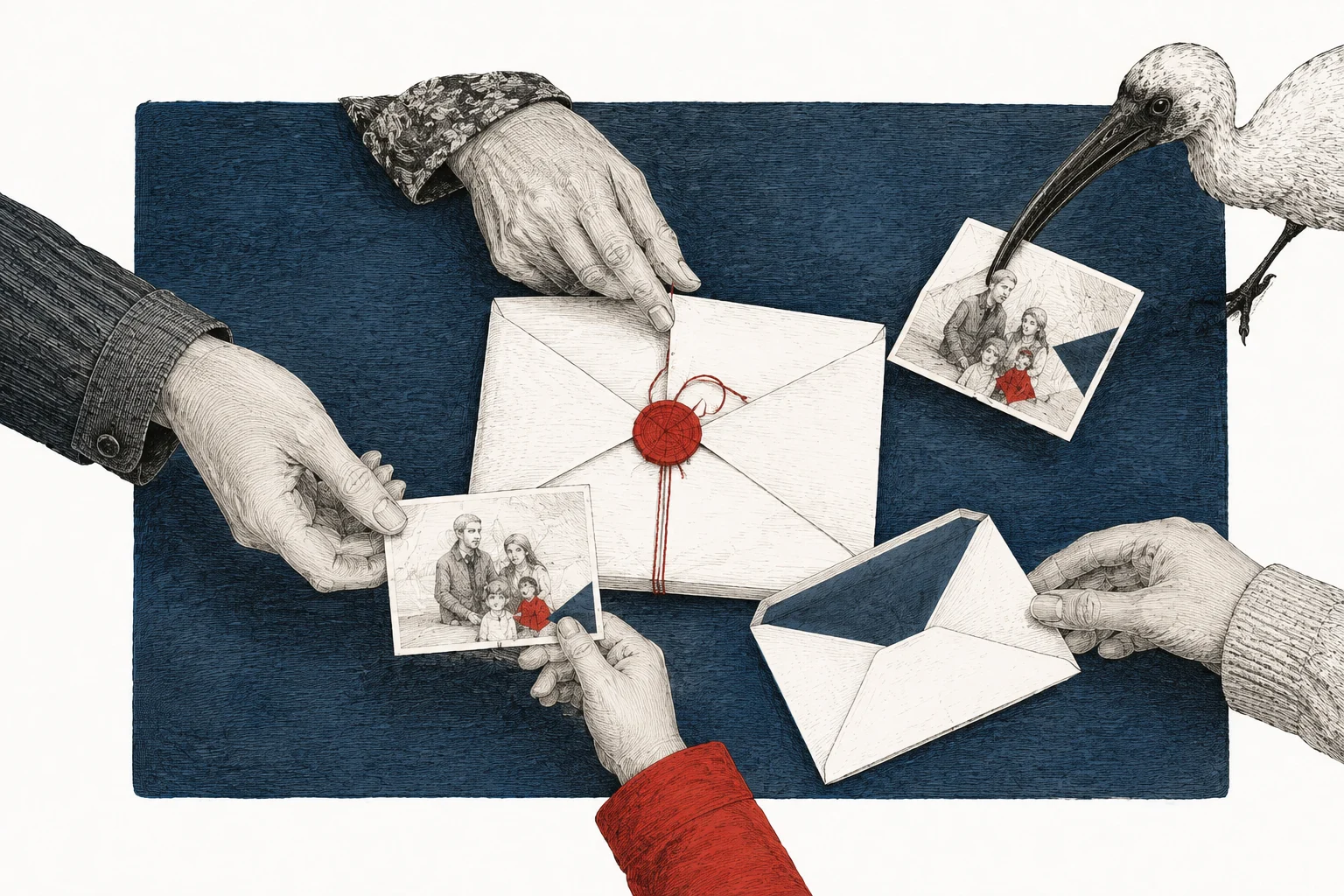
The picture crosses a blue table, from one pair of hands towards another. The ibis waits beside the letter. Sending something to a person still leaves a decision about what that person may do with it.
Read the related guide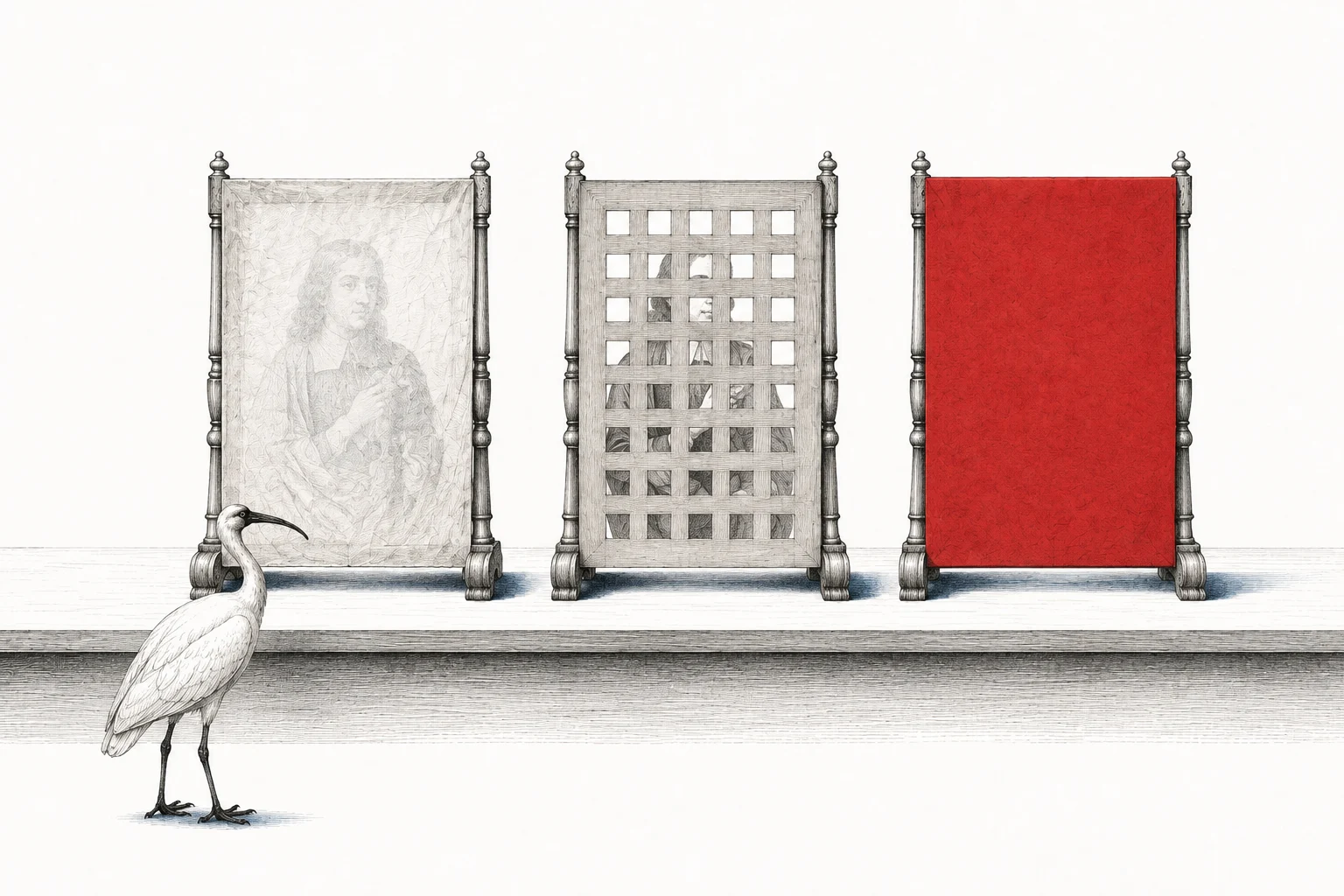
Translucent paper, a lattice and a red cover leave different amounts visible. The scene asks you to look through the treatment instead of judging only how the treatment looks.
Read the related guide02c. 8 CEA myth, told by Ovid
Even the reeds had something to say.
In Ovid's telling, King Midas hides his donkey's ears. The servant who cuts his hair discovers the secret and cannot bear to keep it entirely to himself. So he digs a hole, whispers into it, and covers it with earth.
It seems like a reasonably private place to put a sentence. Then reeds grow above it. When the wind moves through them, they repeat what he said. Ovid tells it in Book XI of the Metamorphoses.
The useful part, for me, is the extra carrier. The secret leaves the person who knew it and takes on a life he never intended. A family photograph can do something much more mundane: leave a private chat, become somebody's profile picture, then turn up in a screenshot of that profile. Nobody needed to plan the whole journey.
About the illustration
The ibis plays a messenger in these illustrations. It can deliver a picture, file one, or leave with an extra copy. That role is a connection we make here; the bird does not come from Ovid's story.
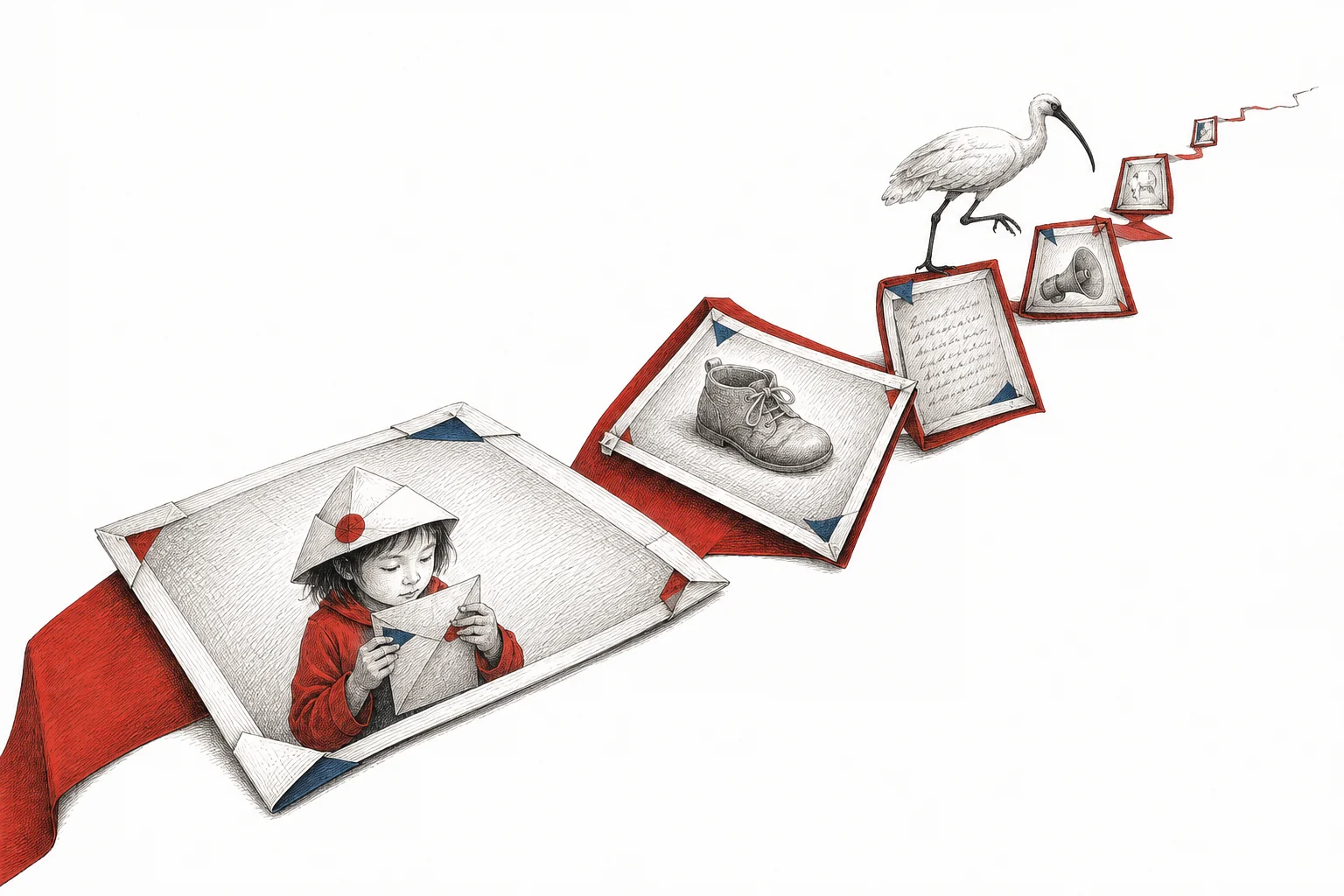
The ribbon carries pictures, words and traces of sound beyond the frame. It stands for the parts of a post that travel together: the face, the caption, the voice and the copies.
Read the related guide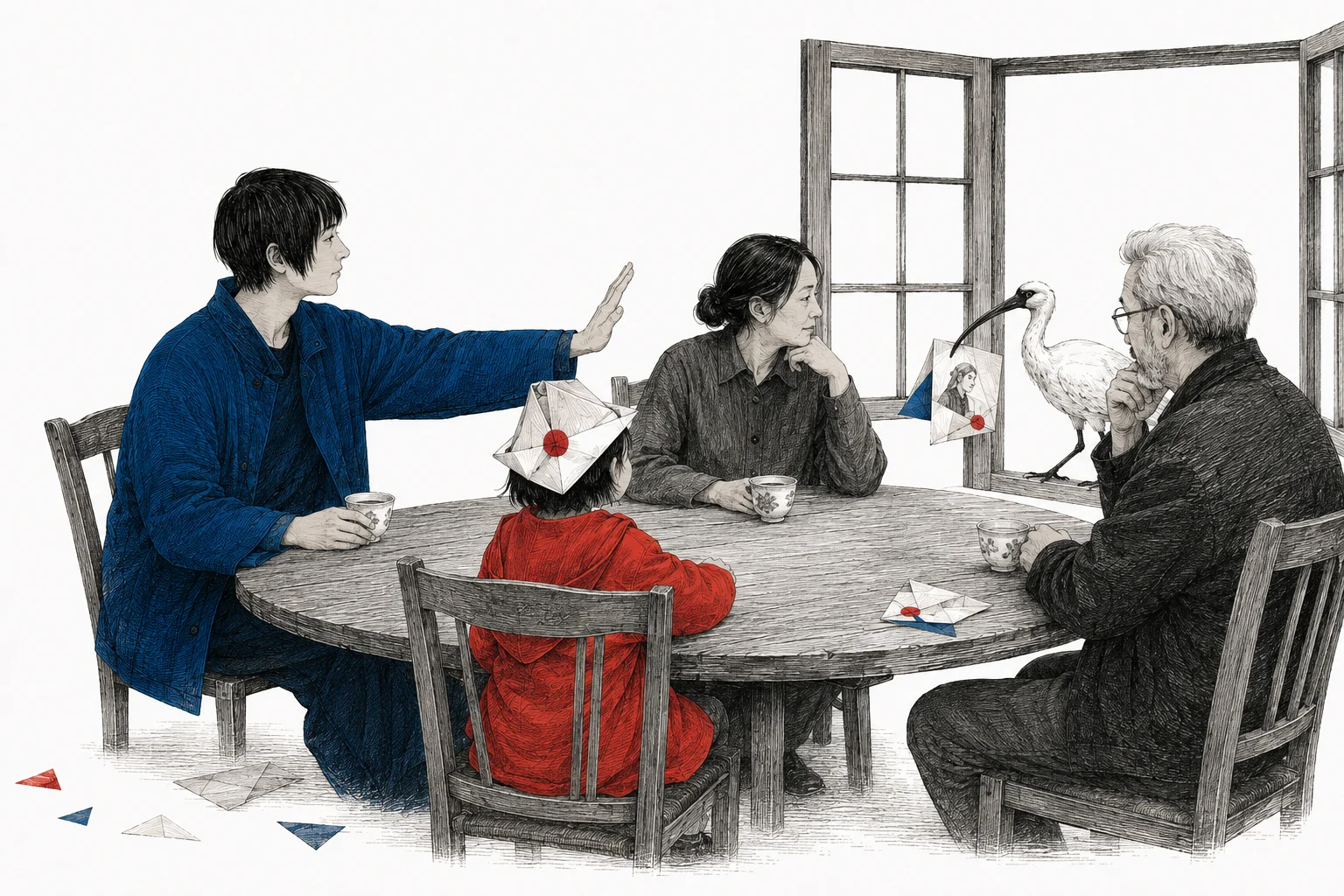
A parent pauses a picture on its way towards an open window. Nobody at the table has to be a villain. The boundary is simply that receiving a family picture does not automatically include permission to publish it.
Read the related guide031531–1697Books and surviving letters
Ordinary life had reasons to stay private.
In 1531, Andrea Alciato's Emblematum liber helped establish the printed emblem book: a small image, a motto and explanatory verse working together to make a point. These books could be moral, political, religious or simply puzzling. They taught readers to look for an argument inside a scene. The University of Glasgow introduces the first edition.
Meanwhile, a letter could be folded into its own enclosure. Tucks, slits, seals and paper locks made it harder to open casually. Some arrangements left damage that the recipient could notice. The final letter of Mary, Queen of Scots, written on 8 February 1587, preserves one particularly elaborate example. The National Library of Scotland explains its folds.
But this wasn't only a royal concern. On 31 July 1697, Jacques Sennacques wrote to a cousin asking for a certified death notice. His carefully closed letter never reached its destination. It survived among undelivered mail in the Brienne Collection. I find the paperwork quite reassuring. A life doesn't need to contain a great scandal to deserve a private letter. The surviving letter and its contents.
About the illustration
Folded letters and emblem books are visual references for this series. Fine lines suggest older prints; red covers and oversized machinery connect the scenes to the questions in the guide. The generated pictures are contemporary interpretations of those references. The surviving letters and books have their own histories, linked above.
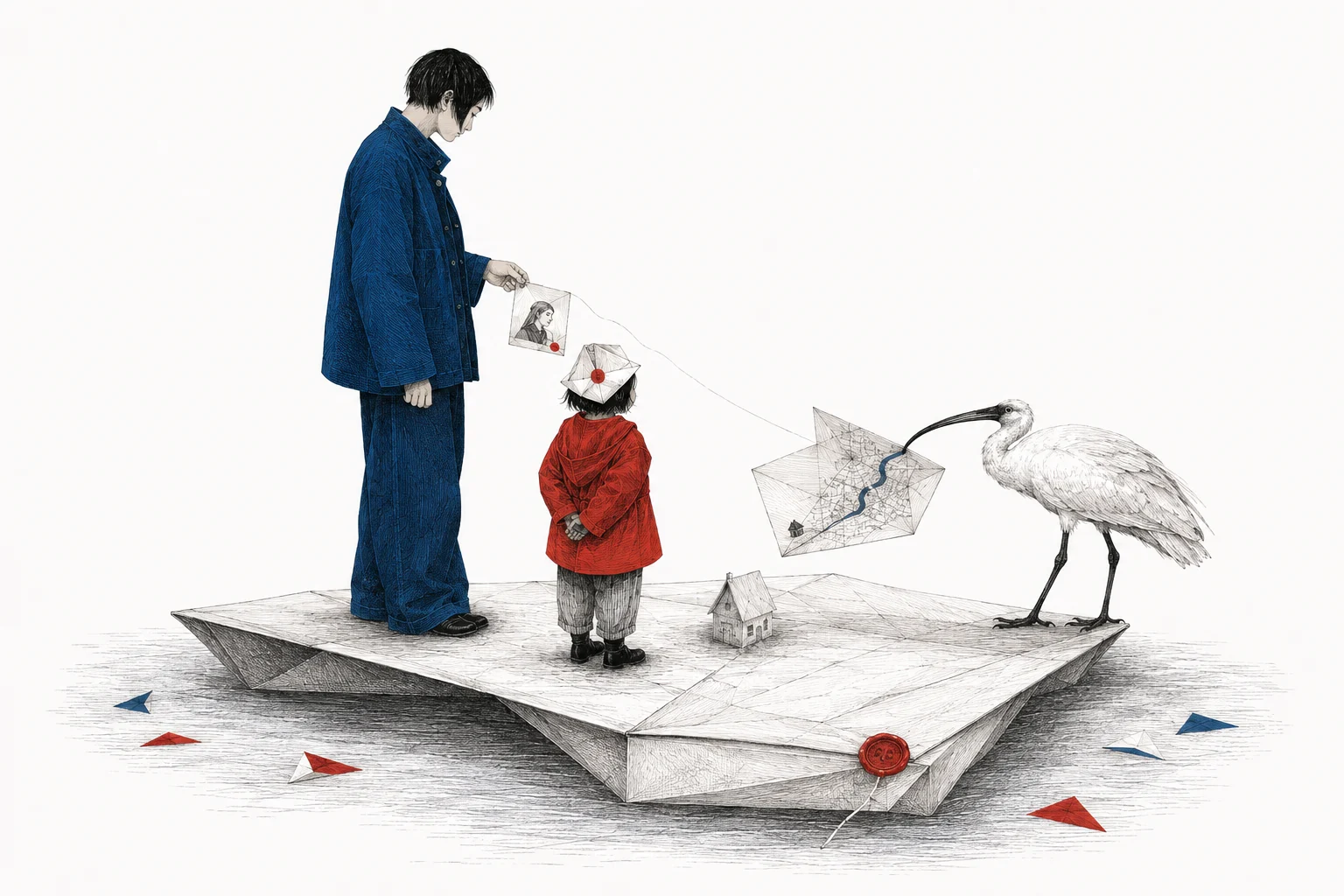
The ibis pulls a thread and a map comes with it. A photograph can hold information you never wrote in its caption. Paper gives that otherwise invisible connection something we can follow with our eyes.
Read the related guide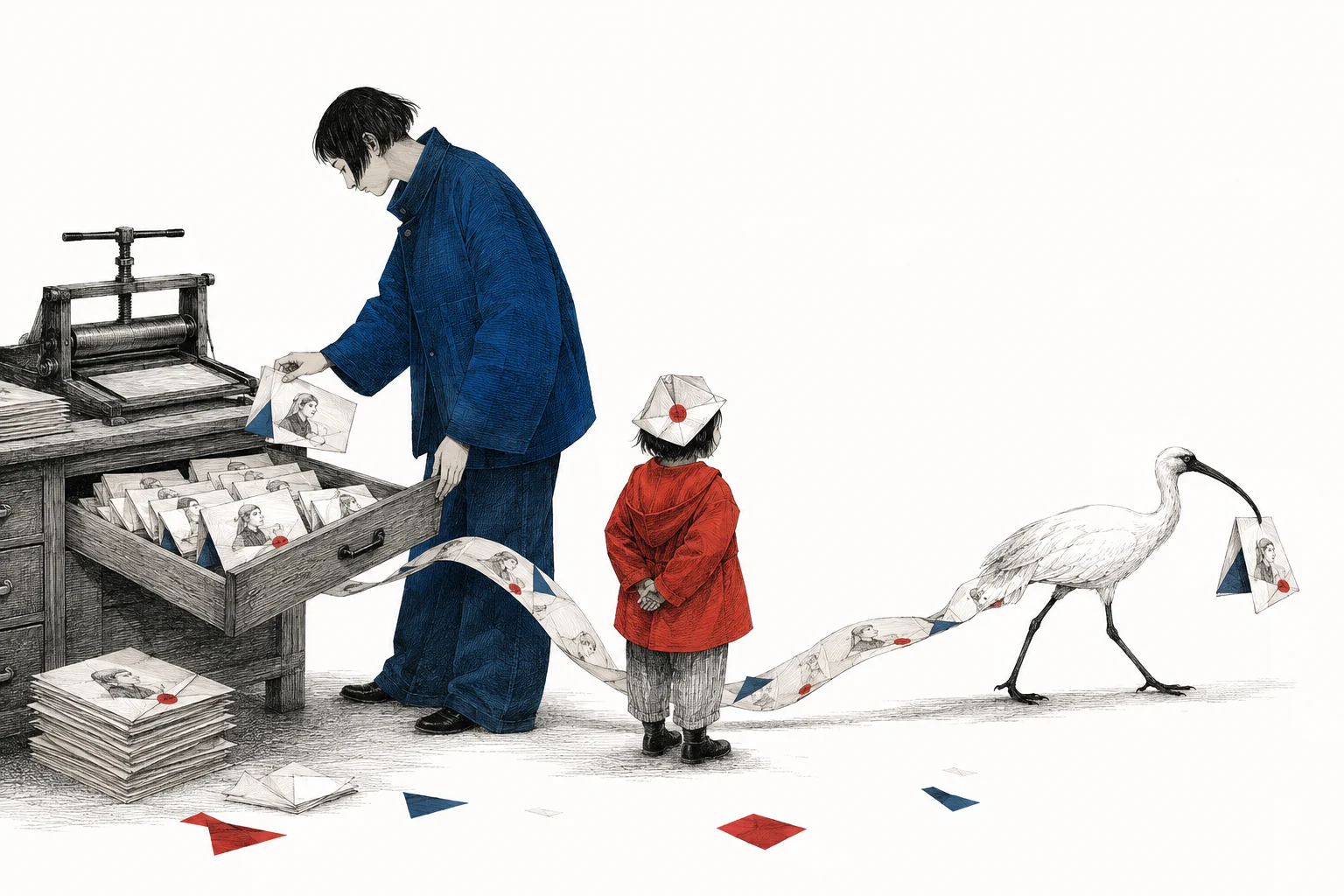
While the parent gathers the portraits, the bird leaves with one more. The scene is about the work of finding where a picture went. Taking down one post does not collect all the copies.
Read the related guide041749–1791Imaginary spaces and a proposal
You cannot tell whether someone is watching.
Around 1749–50, Giovanni Battista Piranesi published the first version of his Imaginary Prisons. He later reworked the plates and expanded the series in 1761. Stairs, bridges and enormous interiors leave the people inside them looking very small. These are invented spaces, with meanings people still debate. Museum Boijmans compares the editions.
A few decades later, Jeremy Bentham developed the Panopticon proposal around a central inspection idea from his brother Samuel. The arrangement would let an inspector observe people who could not reliably tell whether they were being watched. The letters describing it were written in 1787 and published in 1791. UCL explains the mechanism; the original edition records the dates.
The uncertainty was meant to do some of the work. A person who cannot tell when they are watched may start organising their behaviour around the possibility. That gives privacy a consequence beyond whether a particular secret gets out: room to act without continually imagining an observer.
About the illustration
The scale of the illustrated towers recalls Piranesi's interiors. Their cameras and information strips belong to the modern privacy question. Piranesi's prints and Bentham's proposal had different purposes; the connection here is about how small someone can feel in a space arranged around a watcher.
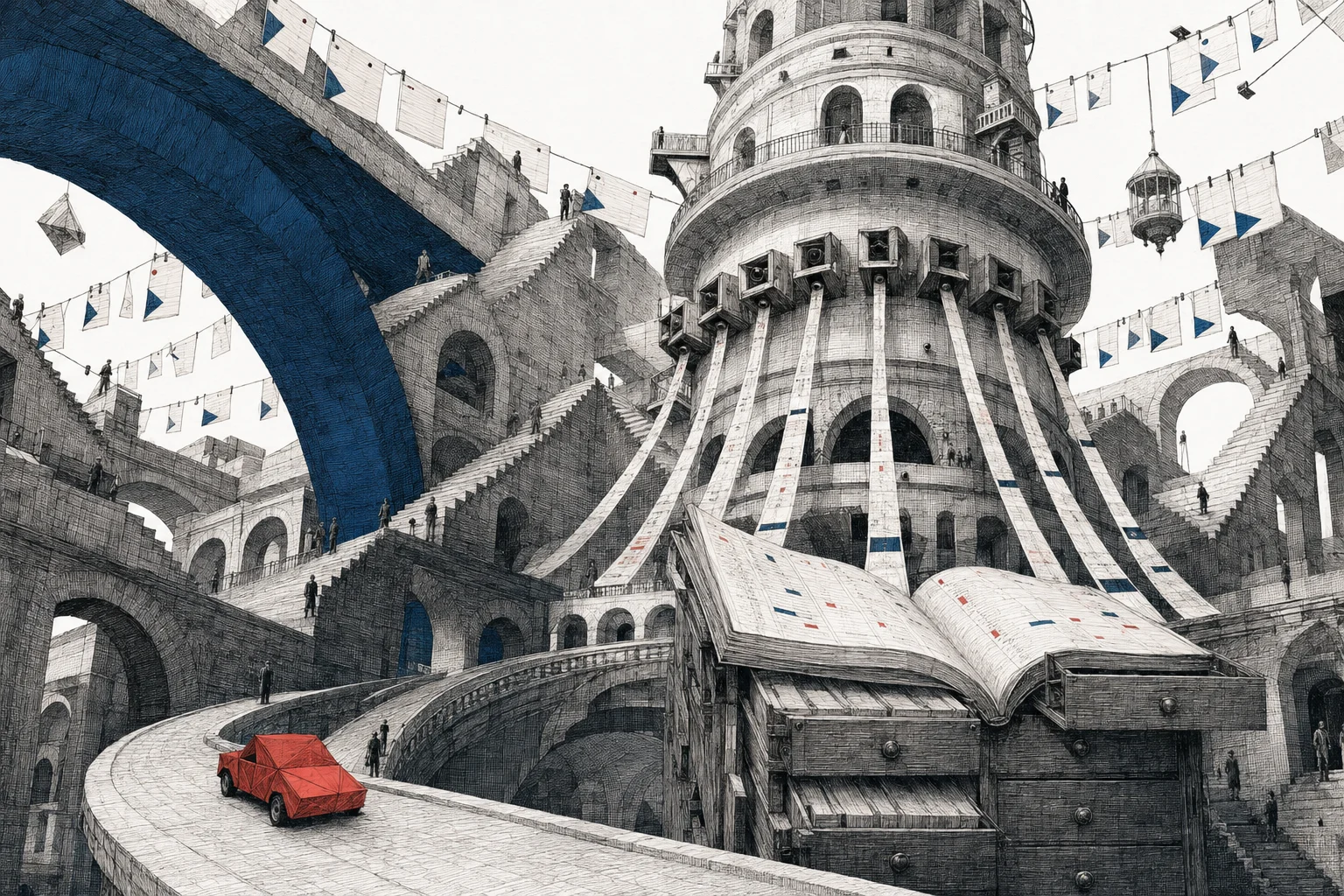
A tiny car passes beneath an impossible tower. Stairs and paper strips turn a single sighting into part of a larger system. The architecture borrows a sense of scale from imaginary prisons; the searchable journeys are our modern subject.
Read the related guide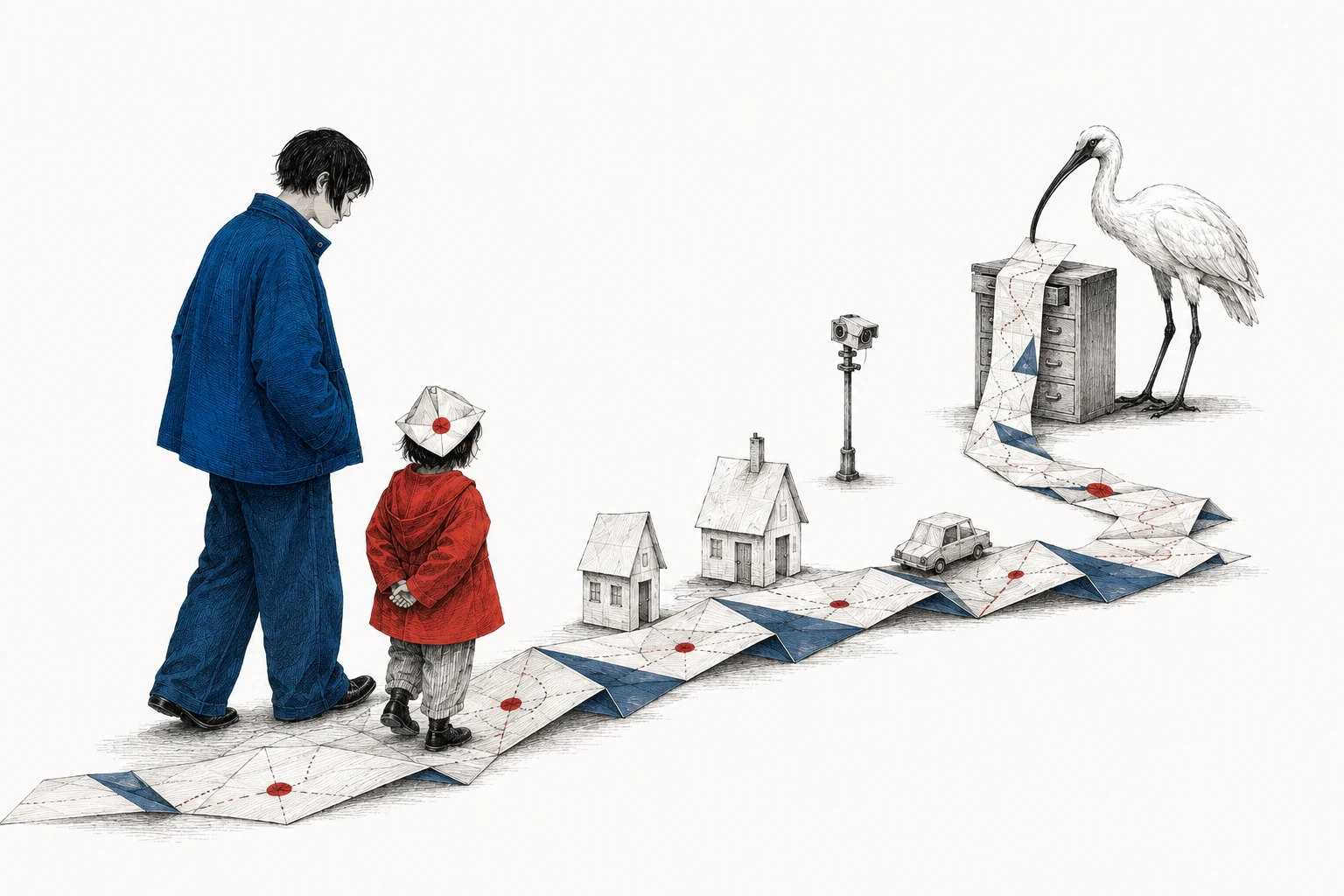
An ibis files the family's route as they walk through the town. The face is only one way to recognise a life. Places, times and repeated journeys deserve their own attention.
Read the related guide051888–1890A camera and an argument
The camera leaves the studio.
In 1888, a Kodak camera came loaded for one hundred pictures. After using the roll, its owner could send the whole camera away for developing and reloading. The photograph was becoming something more people could make without arranging a studio sitting. See the original Kodak at the Smithsonian.
In 1890, Samuel Warren and Louis Brandeis published The Right to Privacy. They wrote about quick photographs, newspaper intrusion and the circulation of portraits without permission. Kodak belongs to the technological setting; it would be too neat to say that one camera caused the essay. Read their argument in the Brandeis collection.
The question still fits a family day out. You can be happy to spend an afternoon among other people and still object to a photograph being published to an audience you never chose. Being present and agreeing to publication are different decisions. The law around those decisions depends on where you are; the conversation can often start before the shutter.
About the illustration
The bellows camera makes the photographer's action almost comically visible. Beside it, a raised hand is enough to change the scene. The companion image turns a still portrait into a sequence: once the picture moves, the work of keeping a face covered has to move with it.
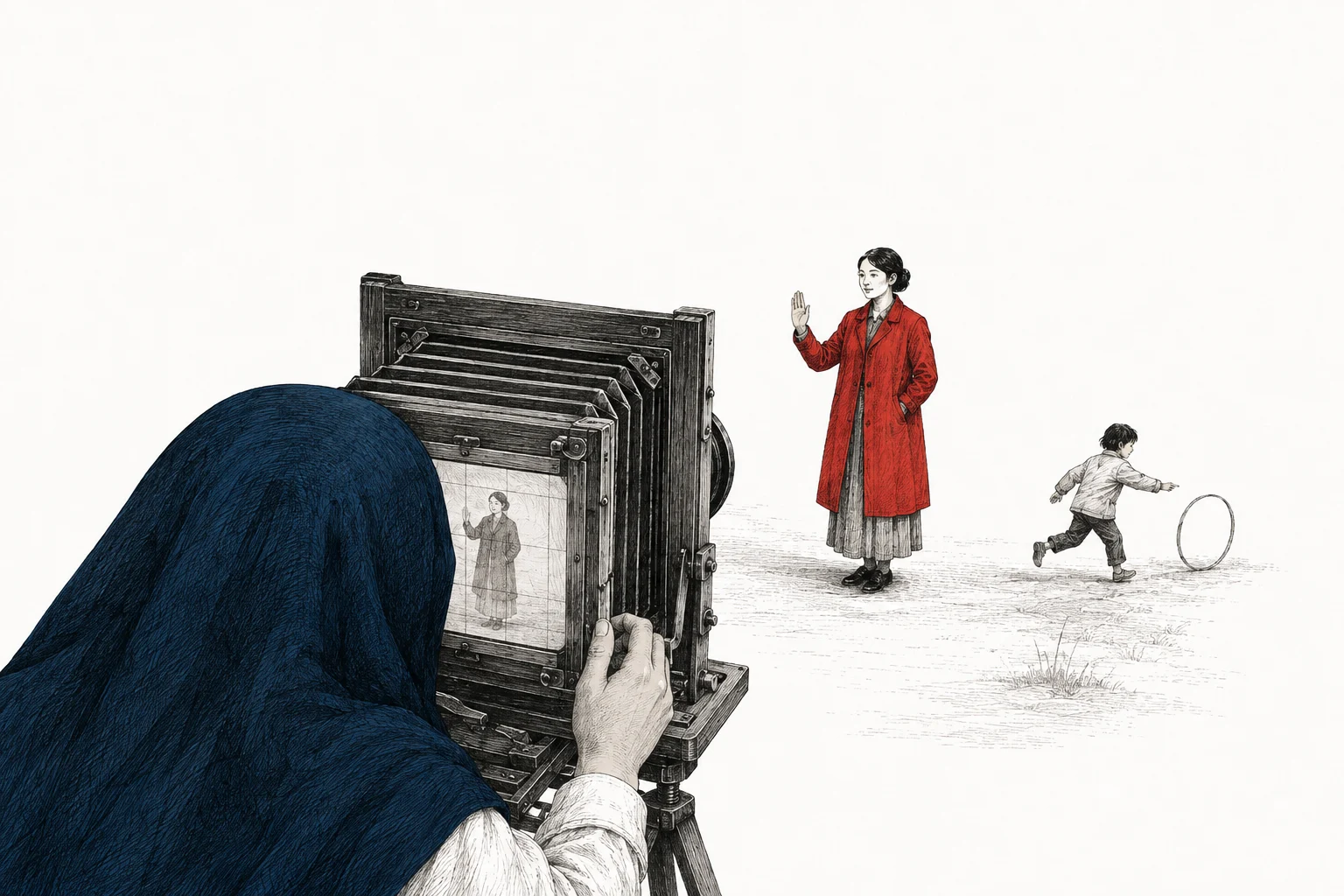
The large bellows camera makes the act of taking a picture conspicuous. The parent's raised hand is a request made while there is still time to change the shot.
Read the related guide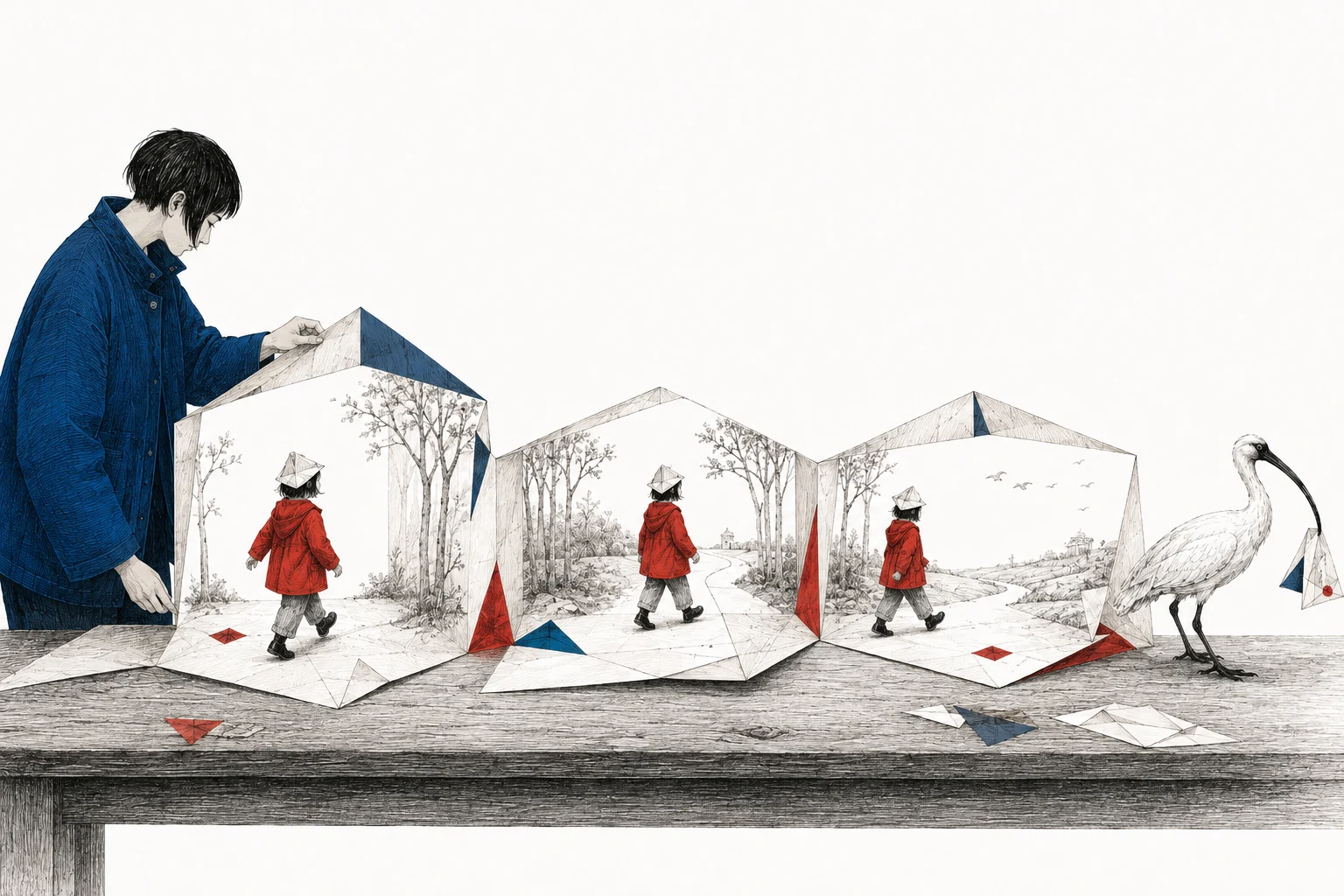
A child walks through three small paper stages. Each moment needs its own cover. A still picture of a successful edit cannot tell you whether the rest of a video is covered too.
Read the related guide061948An international declaration
The home and the letter are worth naming.
On 10 December 1948, the United Nations General Assembly adopted the Universal Declaration of Human Rights. Article 12 names privacy, family, home and correspondence, and calls for protection against arbitrary interference. It also addresses attacks on honour and reputation. Read Article 12 in the declaration.
It is striking how ordinary those things are. The room you live in. The people close to you. The letter meant for one person. A boundary around them gives people somewhere to live without having to explain every part of that life to an audience.
The declaration did not instantly give everyone the same enforceable rights. It set out a standard whose protection still depends on laws, institutions and what people actually do. The Australian Human Rights Commission explains the declaration's legal status.
About the illustration
The viewpoint comes back down to a house. Its open walls let us see the rooms and the relatives inside them, each holding a different picture. There can be several separate decisions behind the simple word 'family'.
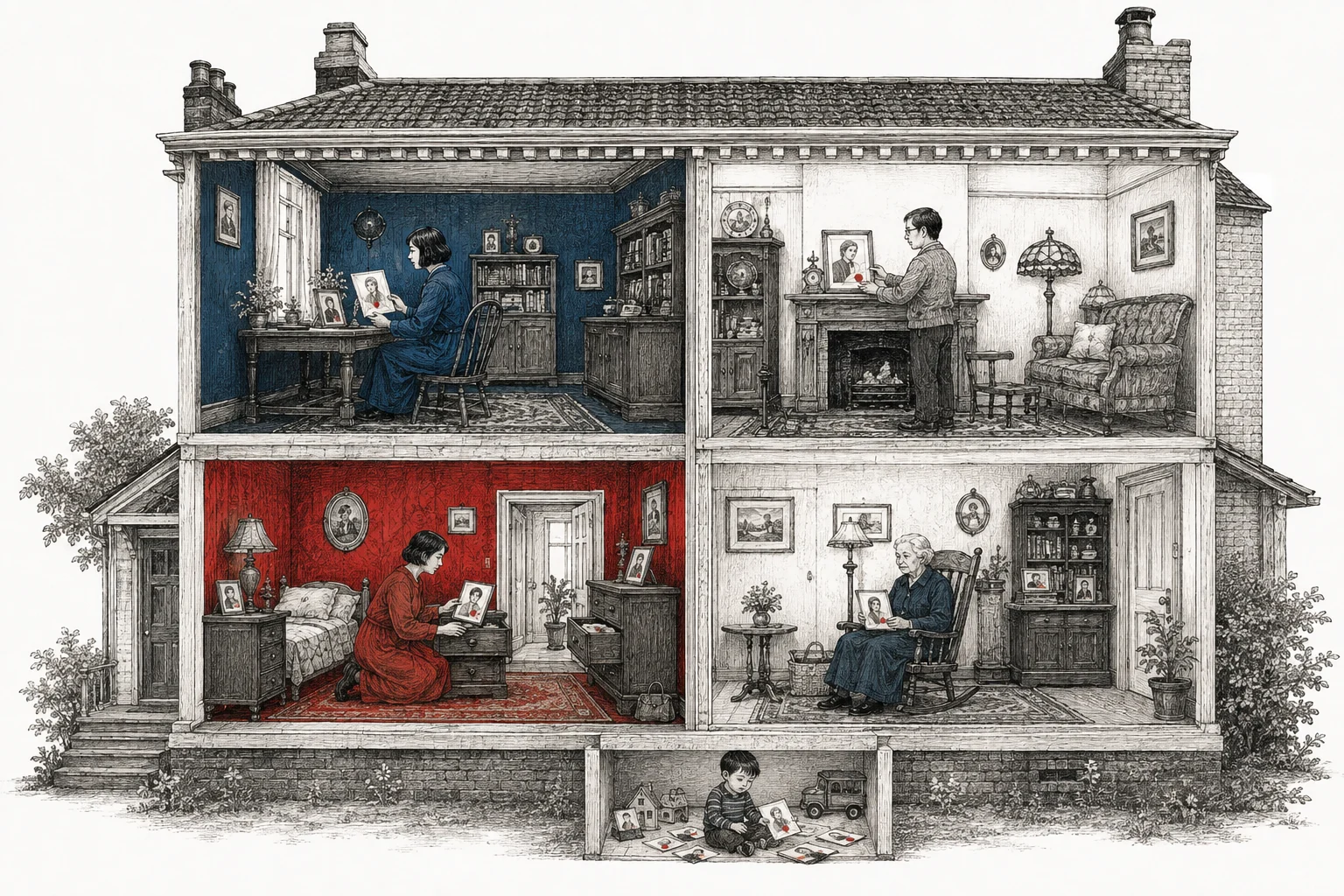
The house looks private from outside. In the cutaway, different relatives each hold a picture. It makes the household visible as several people making separate choices about what to keep and share.
Read the related guide071989–1992Citizens preserve the records
This time, the files needed to survive.
On 4 December 1989, women activists took the initiative in Erfurt as citizens entered Stasi offices and stopped the destruction of records. The Stasi was East Germany's secret police. Protesters occupied its Berlin headquarters on 15 January 1990. Germany's Federal Archives recounts the events in Erfurt and the occupation in Berlin.
Roughly sixteen thousand bags of papers torn up by hand survived. Archivists have worked to reconstruct them. Regular access to people's own files began in January 1992. Preserving the evidence helped people find out what had been collected about them. The reconstruction project and the archive's account of access explain what happened next.
This complicates a comforting rule: just delete the information. Sometimes deletion protects the person described. Sometimes it protects the person who did the watching. Who controls the record, who can inspect it, and who can challenge what it says all matter.
About the illustration
The curved archive makes a classification problem visible. An adult's portrait labels the drawer; a child's red cap is inside. The illustration was made for our guide to children's photos on adult accounts. Here it also asks a broader question: does the label on a file tell us enough about the people whose lives it holds?
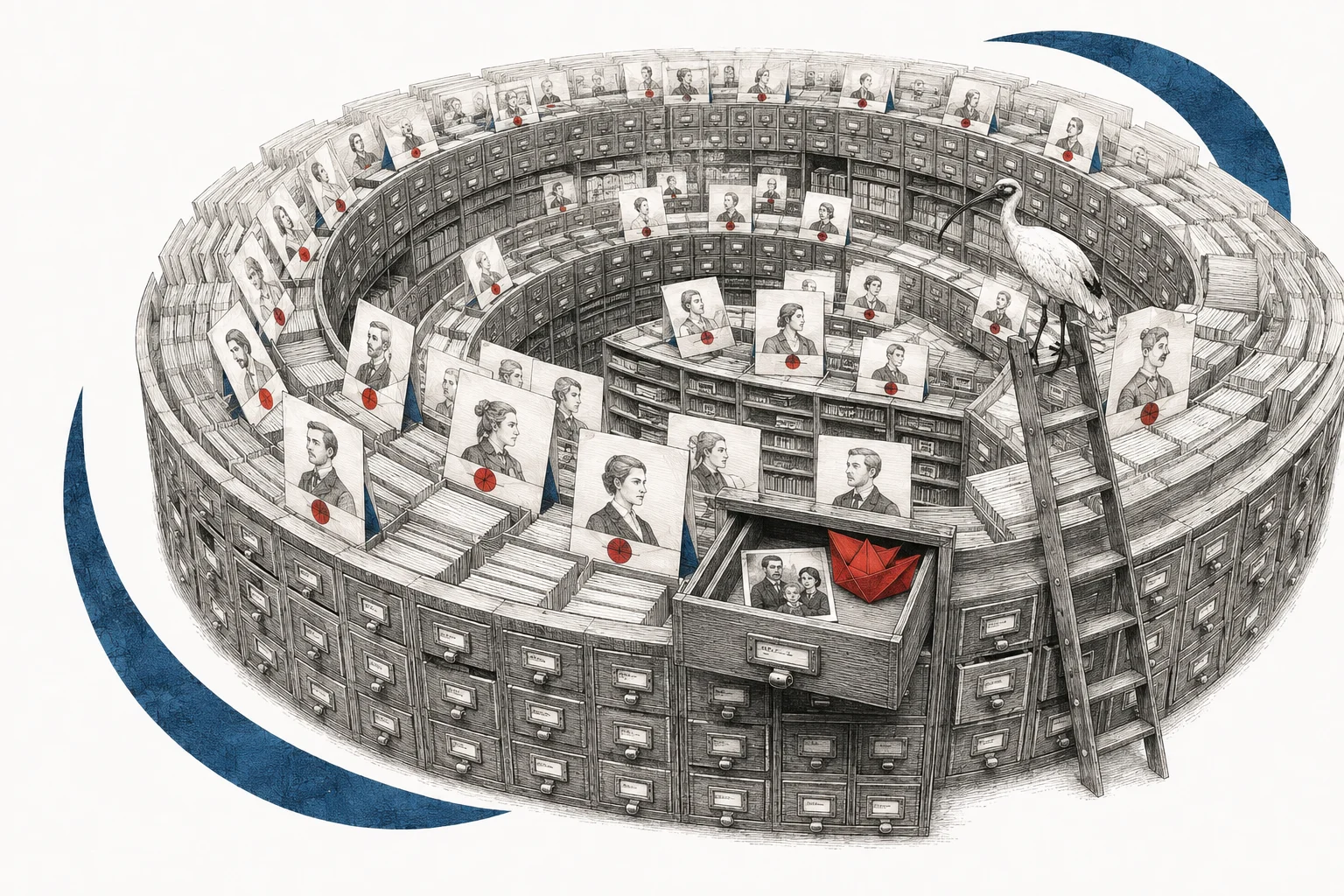
A child's red cap sits in a drawer associated with an adult portrait. A database's categories can obscure whose life a record actually describes. This illustration accompanies the question of children's pictures on adult accounts.
Read the related guide081993 onwardThe networked photograph
The picture no longer needs the room.
On 30 April 1993, CERN put the World Wide Web software in the public domain. It was an extraordinary decision for sharing knowledge. A system first developed to connect scientific information could grow far beyond the place where it began. CERN tells the story.
The web is not the beginning of digital copying. It belongs here because publishing and linking make the picture's journey easier to follow, and harder for its owner to contain. A photograph can live on one website while a search result points to it from another. Taking away the directions does not take the photograph off the first site.
A family post can also be a video. It carries a face through many frames, with voices and surroundings travelling alongside it. The parent's job gets more specific: cover this face for the whole clip, check the sound, choose the copy to upload. 'I edited it' needs to refer to the file that actually leaves the device.
About the illustration
A signpost, a curtain and two paper ribbons stand in for things that happen on a screen. The signpost separates a search result from the page holding the photo. The curtain and ribbons show why a moving cover needs attention at its edges and throughout the clip.
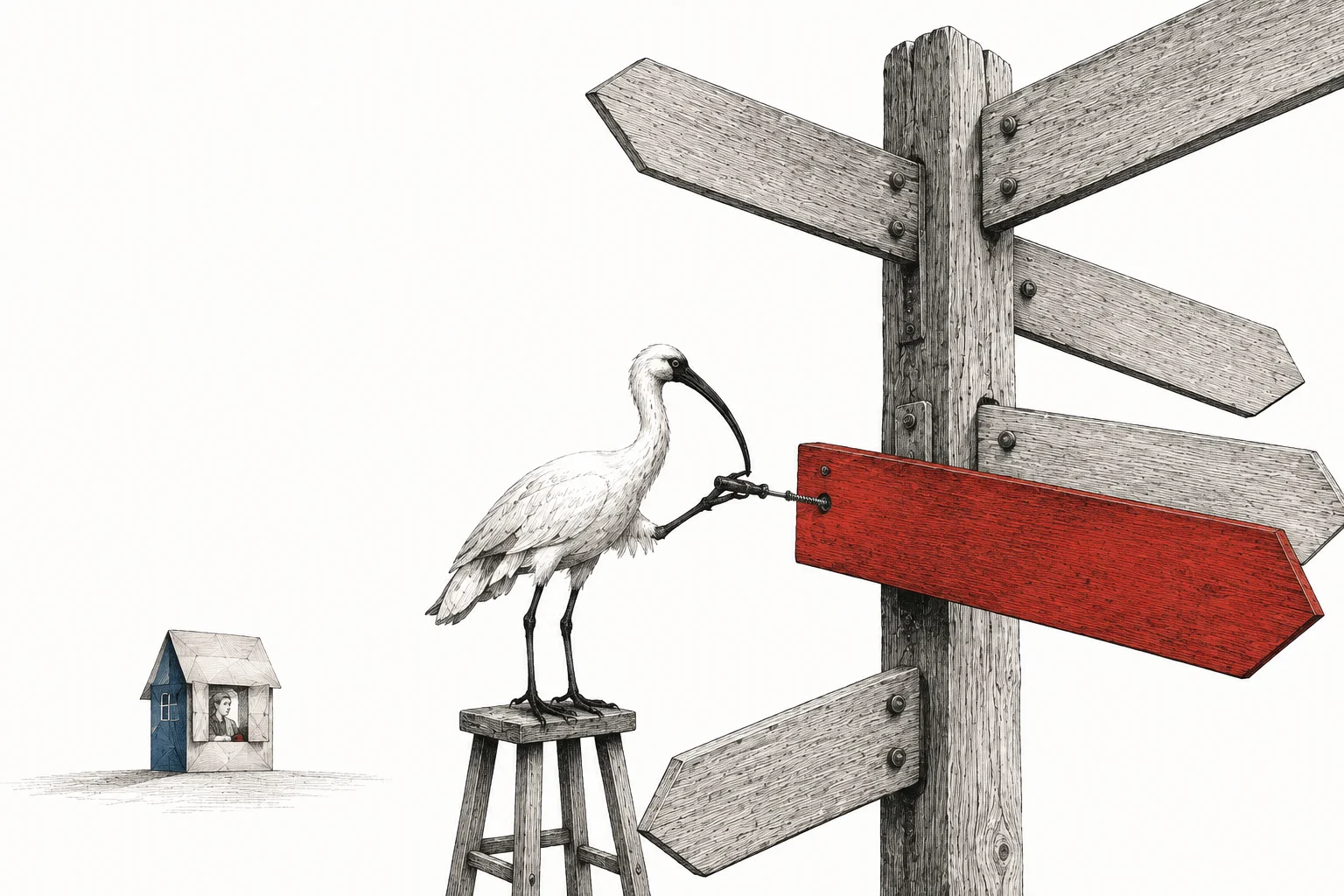
The bird dismantles the directions while the picture remains in the house. A search result and the page it leads to are two separate things. Removing one does not necessarily remove the other.
Read the related guide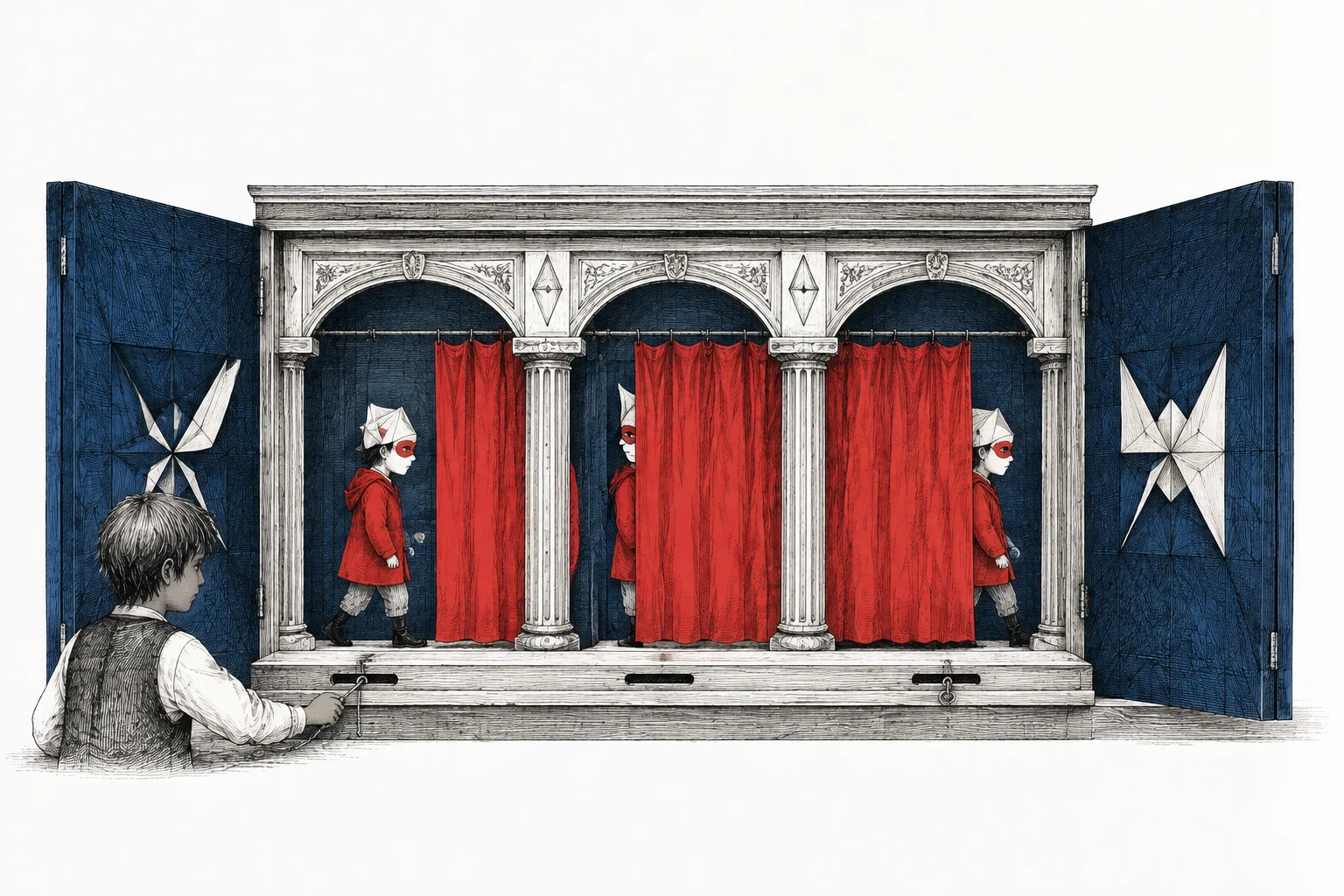
A red curtain crosses the stage while a child moves behind the columns. A cover has a position, an edge and a moment when it begins. Each matters when the subject keeps moving.
Read the related guide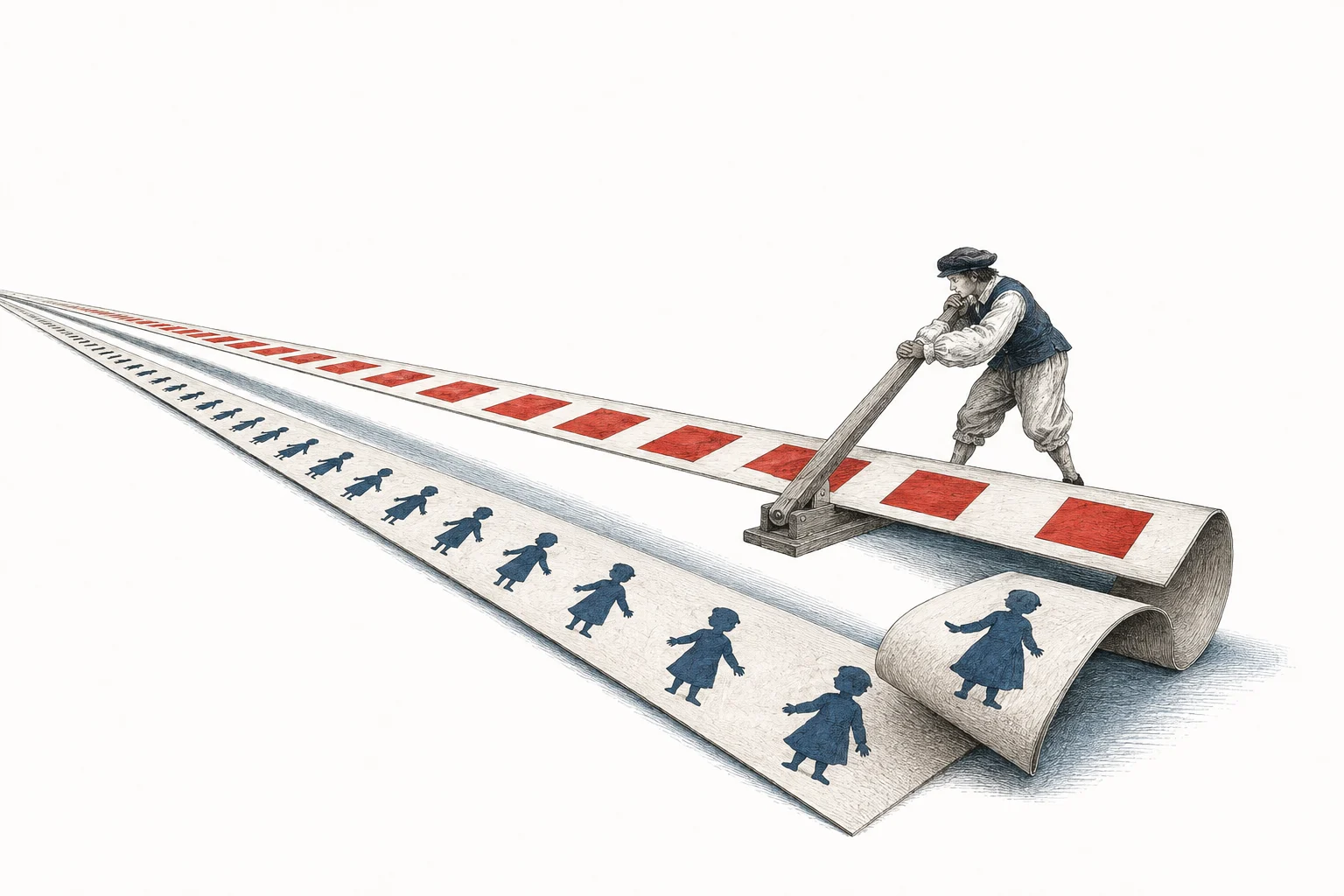
Two paper ribbons need to stay aligned: the moving picture and the covers above it. The craftsperson makes an editing task physical enough to see. A slipping ribbon becomes an exposed frame.
Read the related guide092020–2026Generation, reading and surveillance
A convincing answer can still be a guess.
In 2020, the PULSE research project demonstrated a way to turn very small face images into detailed, plausible portraits. Its researchers explicitly warned that the outputs were imaginary faces, not a way to recover the original person's identity. The sharpness of a picture was not proof of its truth. The researchers' explanation.
There is a different kind of revelation in the letter we left unopened in 1697. In 2021, researchers scanned the sealed letter with X-rays, then used software to work out how its folded surfaces fitted together. That let them read the writing without physically opening it. This required physical access and specialised equipment; an ordinary photograph of a sealed letter could not do the same job. Here, the hidden writing was actually recovered. The original research. Guessing a plausible face and reading a surviving sentence are different achievements.
Other systems organise observations. Flock says its vehicle cameras record number plates, vehicle details, times and locations, and that these plate readers do not use facial recognition. In August 2025, an Illinois audit found that U.S. Customs and Border Protection had accessed Illinois plate-camera data in violation of state law. A record of a journey raises questions about access even when nobody is trying to identify a face. Flock's description; the Illinois audit announcement.
About the illustration
The oracle is a fictional machine. It receives an original and produces something new, while leaving the original's destination uncertain. Beside it, three possible faces show what it means to produce a plausible answer. These scenes illustrate the questions; the research linked above supplies the evidence.
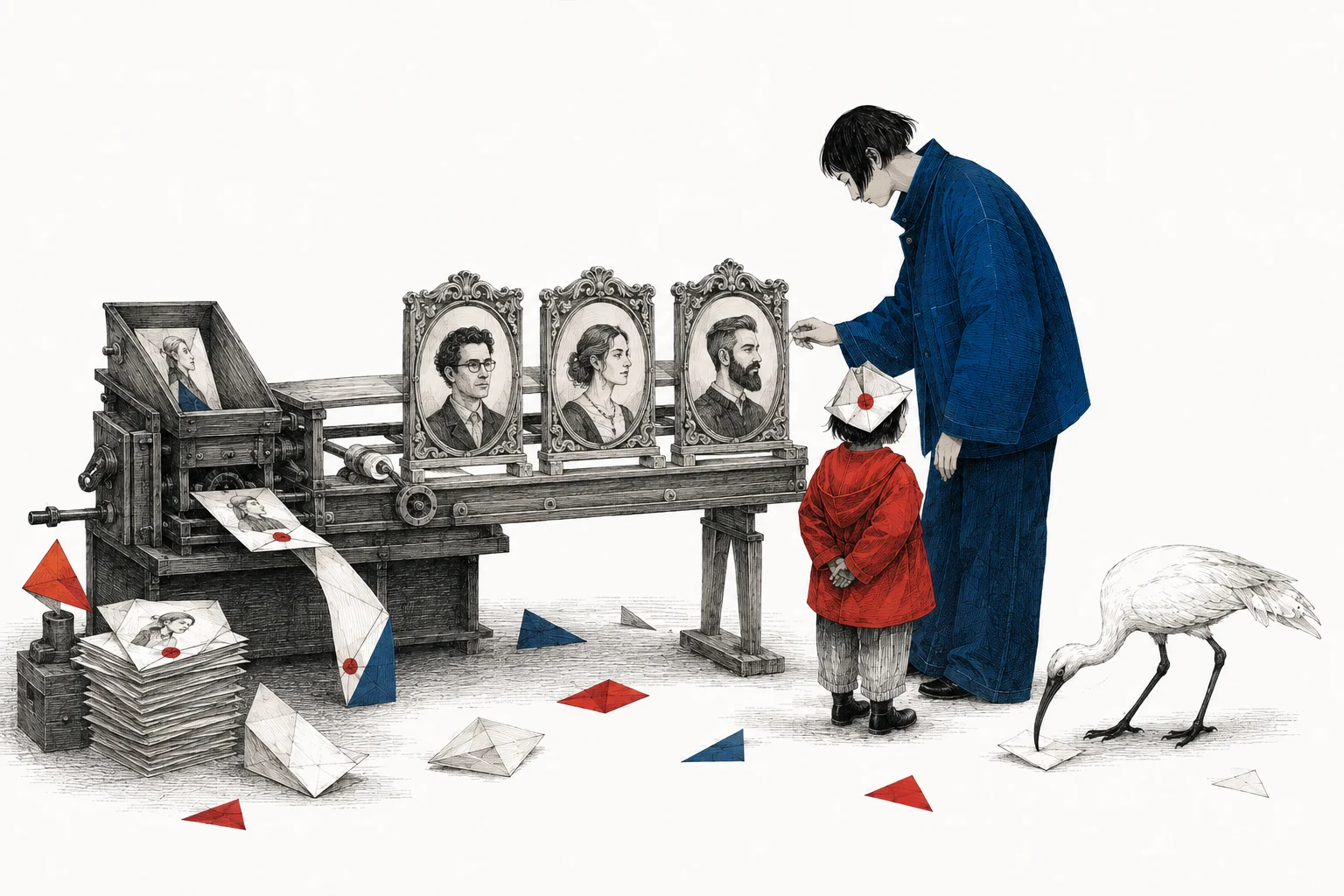
The machine offers several convincing portraits. Their disagreement is the point. An image can look certain while the system that made it is supplying a plausible guess.
Read the related guide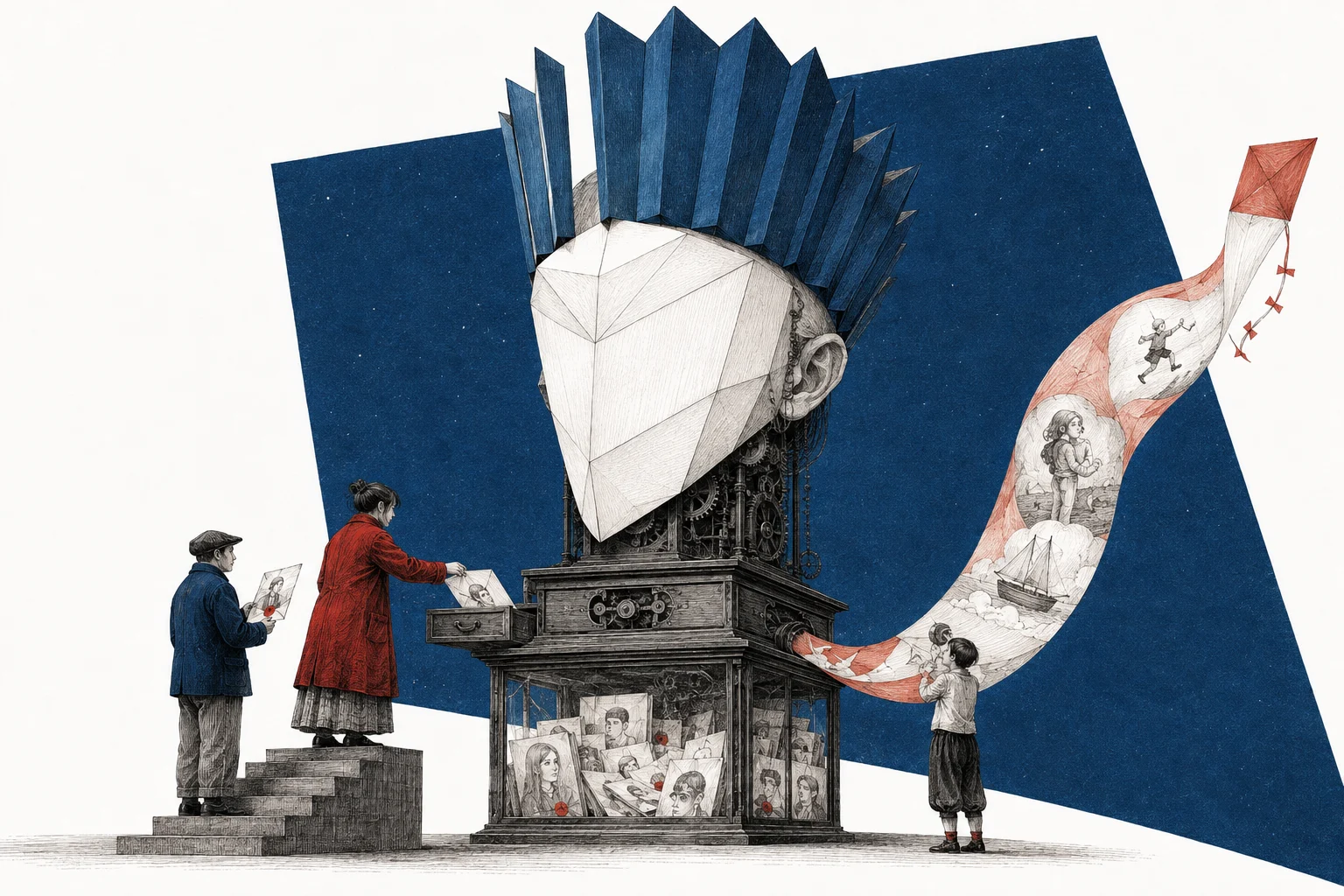
The paper oracle gives back a new picture while taking the family prints inside. The output gets our attention. The original's destination is the less visible part of the exchange.
Read the related guide10Today · 2026Back to our family
I still want to share the afternoon.
Miriam and I built Baby Acrobatics to help parents move and play with their babies. We share that work on Instagram, YouTube and Facebook. Our children appear in that work a lot. We've always obscured their faces, and we keep their names and many other life details private. We also ask photographers to leave them out.
I can want someone to see an exercise without needing them to have a clear picture of my child's face. I can send a photograph to family and ask them to keep it in the family. Neither choice makes the rest of the internet private. It gives us something specific to decide before adding another copy to it.
Our free face-covering tool helps with that part. It cannot decide who else posts a picture, hide a spoken name, or remove a journey from a camera database. The privacy guide follows those other questions too. The point is to give our children more room to decide what becomes public as they grow up.
There is a more personal part of this for me, too: how I feel about attention, energy and so many strangers seeing a child's face. I wrote an essay about that feeling and the histories it led me to. The illustration gives the feeling a scene; the essay keeps my intuition separate from what those histories can establish.
About the illustration
The compass can draw a perfect arc. The child has other plans. Beside them, a folded screen gives a family some room beneath an imagined audience of eyes. One picture concerns the tool; the other concerns what we choose to share in the first place.
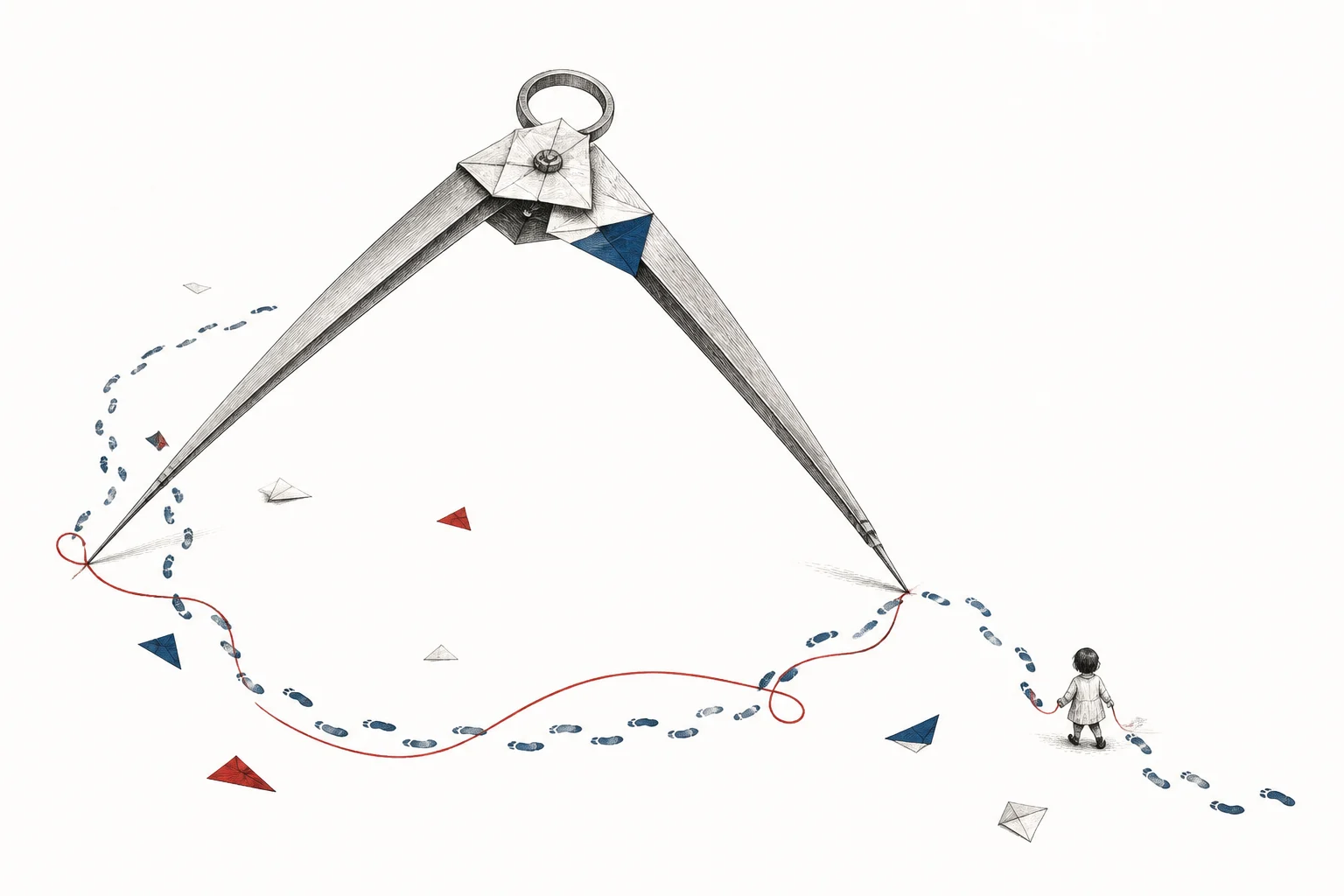
The instrument is precise. The child wanders. This is where the series comes back to ordinary parenting: a tool can help us follow a moving face, but we still have to look at what happened.
Read the related guide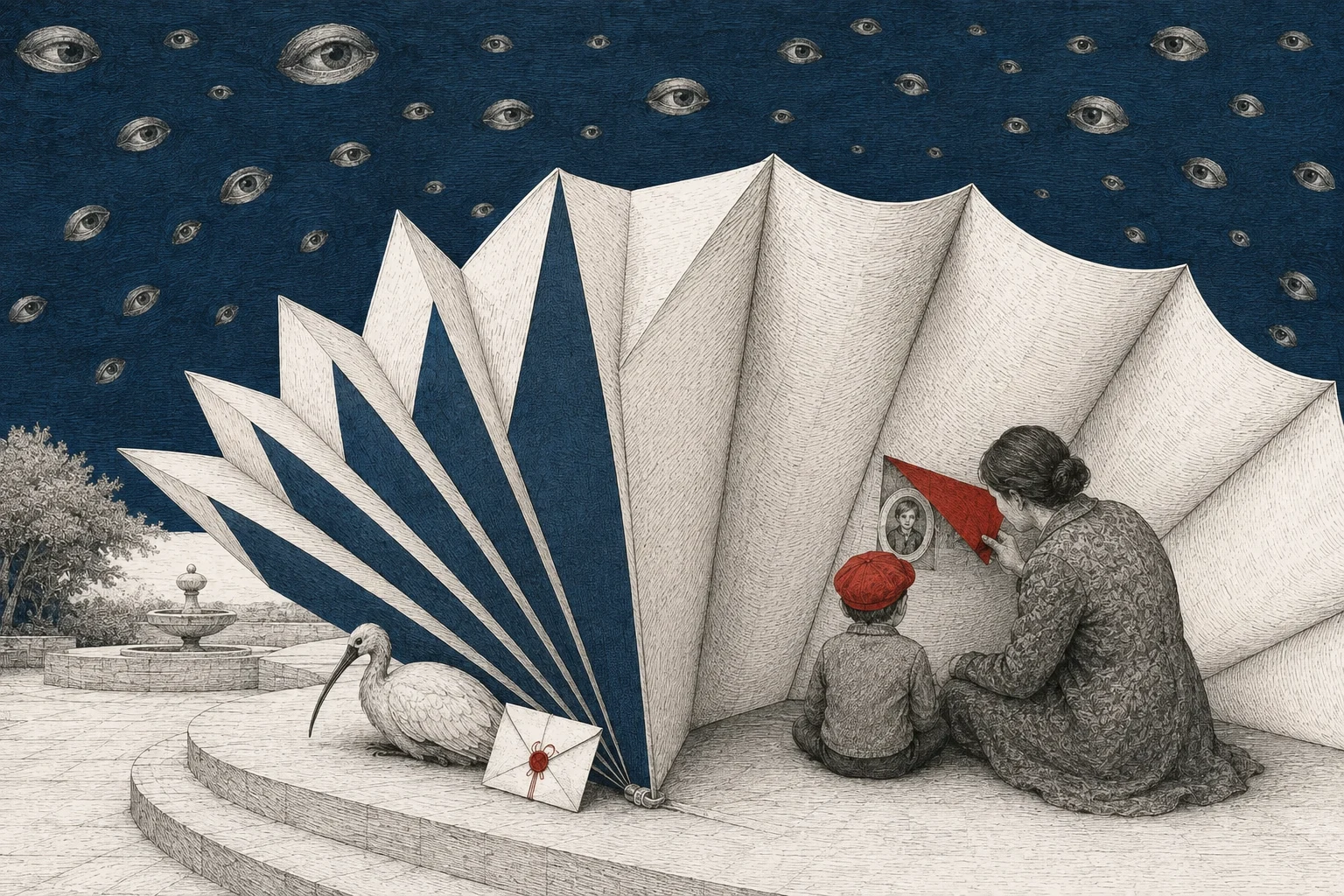
A screen makes a small boundary beneath an enormous audience of eyes. The parent and child keep their afternoon. The eyes are an invented image of attention, not a depiction of a particular sacred tradition or a claim about invisible forces.
Read the related guideA note on the images
About these illustrations
We used AI to generate the illustrations in this guide. The people and scenes are fictional. The pictures are not hand-drawn prints, historical documents or portraits of our children.
The folded letters, emblem scenes and oversized buildings refer to ideas discussed in the timeline. Those references explain the look and meaning of the pictures. They do not establish what material the image model was trained on.
A disclosure tells you how the images were made. It does not settle questions about consent, training data or the effect of AI image tools on illustrators’ work. Those questions apply to our choice too.
The pictures have a small job here: give the writing some breathing room and make a privacy problem easier to picture. The historical accounts and practical advice need their own sources. When an AI service receives a family photo, the question is still what happens to the original and who can use it.
The gallery · AI-generated illustrations
The illustrations in the guide
Open an illustration to see it in full, read the accompanying note, or return to its place in the story.