The three things

- The floor, with nobody stepping in
- Clear floor, a firm surface, and time on it, with nobody stepping in to organize what they do with it. This is the part that comes before anything else we do, and it's also the part that looks the most like nothing.
- Their tummy, and not only on the floor
- On their tummy they're working against gravity to lift and turn their head, and that's what builds the neck, shoulders and trunk they need for head control, rolling and pushing up.
- The movements you do for them
- Taking an arm or a leg gently through a movement they can't make for themselves yet. They don't have to understand anything, follow an instruction or cooperate, which is why you can start these from day one.
What our son got instead of exercises
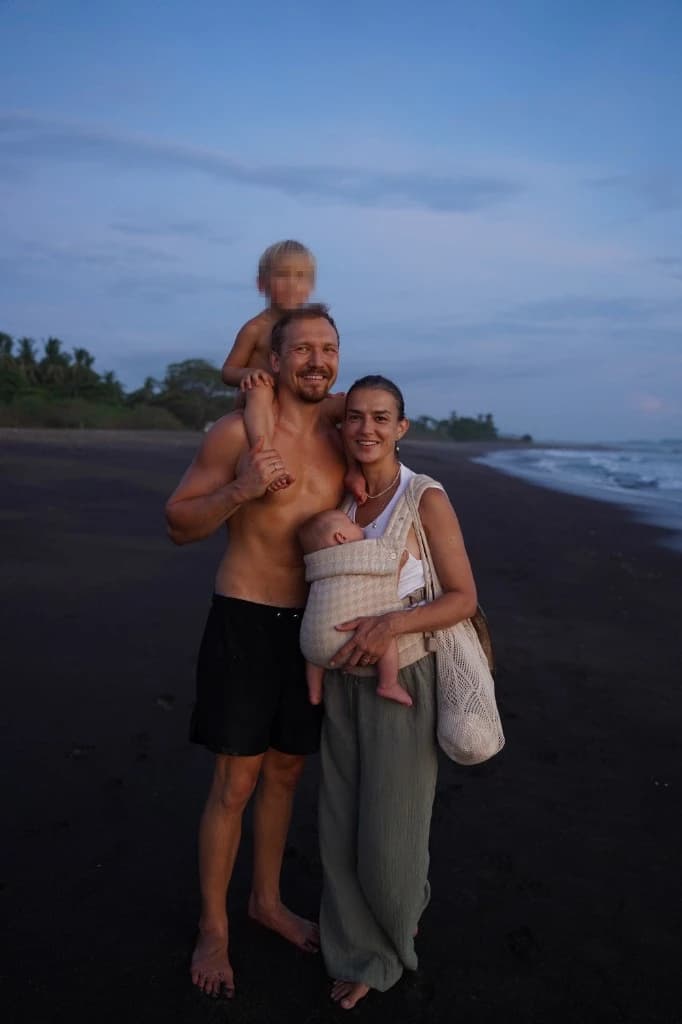
With our son we didn't do any exercises in these months. We thought he was ready at three months, and that's when we started.
What our son did get however was a lot of free movement, floor time & tummy time.
Miriam took a picture of him on his tummy at four weeks old, looking at a black-and-white book. He was already very strong on it, pushing up early, holding his head up early. She sent it to her mom and a few friends because she was proud (and because this is apparently what your camera roll becomes after you have a baby). But their surprise made the moment feel much bigger than it had on our floor.
We saw it every day so to us it was just him, and it took somebody else being surprised for us to actually see it.
A little later, at two months and twelve days, he rolled from his back onto his tummy. He was awake, interested, and working to see something he wanted to see... so that was enough. And it wasn't like an accident, he kept doing it, so he learned how to roll over.
So nobody was moving him to teach him that. He worked it out himself.
Freedom first
That's one child on one floor, so I'm not handing it to you as proof of anything. But what he did have a lot of was freedom, a lot of floor, a lot of time on it, and nobody stepping in to organize what he did with it.
And that's the thing I'd most want you to take out of this. Babies are very good at developing themselves when they've got the room and the freedom to get on with it, and giving them that room comes before anything else we do. Freedom first, and Baby Acrobatics is everything else on top of it.
What that leaves for you
And that sounds simple enough until you're sitting on the floor with a two-month-old, because a lot of what that freedom looks like at this age is a baby doing not very much at all. What counts as taking part is very small: turning toward you, settling into a position, a leg pushing into your hand, a hand opening. So most of the movement here is you doing it, and the head and neck are yours in every position. They have no head control yet, so in every position you're holding that for them.
Tummy time is more than the floor
That photo of him at four weeks is a tummy time photo, but he wasn't on a schedule. He was on the floor a lot, in whatever position he'd take that day, and his tummy happened to be one of them. And tummy time on the floor is just one option. Lying on your chest with their ear against your heartbeat is tummy time. Draped across your lap while you gently rock is tummy time. So if your baby isn't a fan of the floor, don't fight it. Change the surface instead.
If you remember one thing
Freedom first. Room, floor and time, and Baby Acrobatics is everything else on top of it. Most of the movement at this age is you doing it, and the head and neck are yours in every position.
Inside Baby Acrobatics
What we do with our daughter from day one
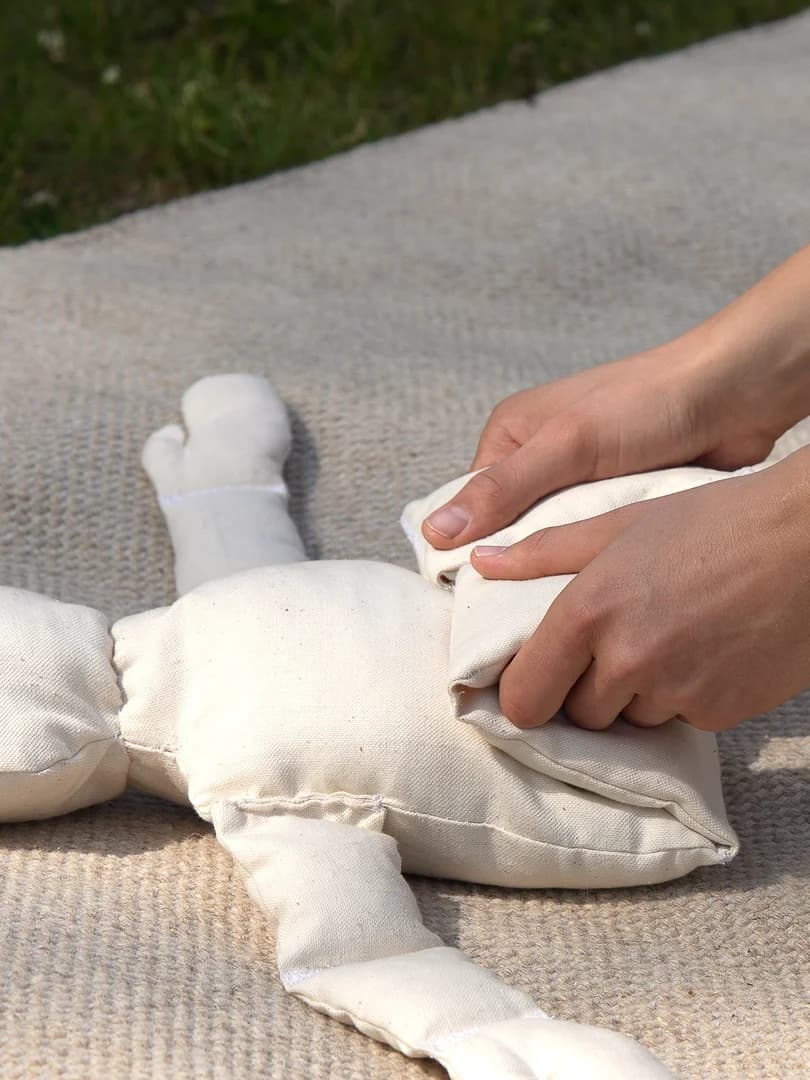
With our daughter we've been doing the exercises since day one, and Knee-to-Chest is one of them. The Blueprint teaches each of the early movements the same way: what's yours to do, what's theirs, how far, and what tells you to stop. Movement Mastery adds the video of each one.
See what’s inside