
Three things the furniture is doing for them
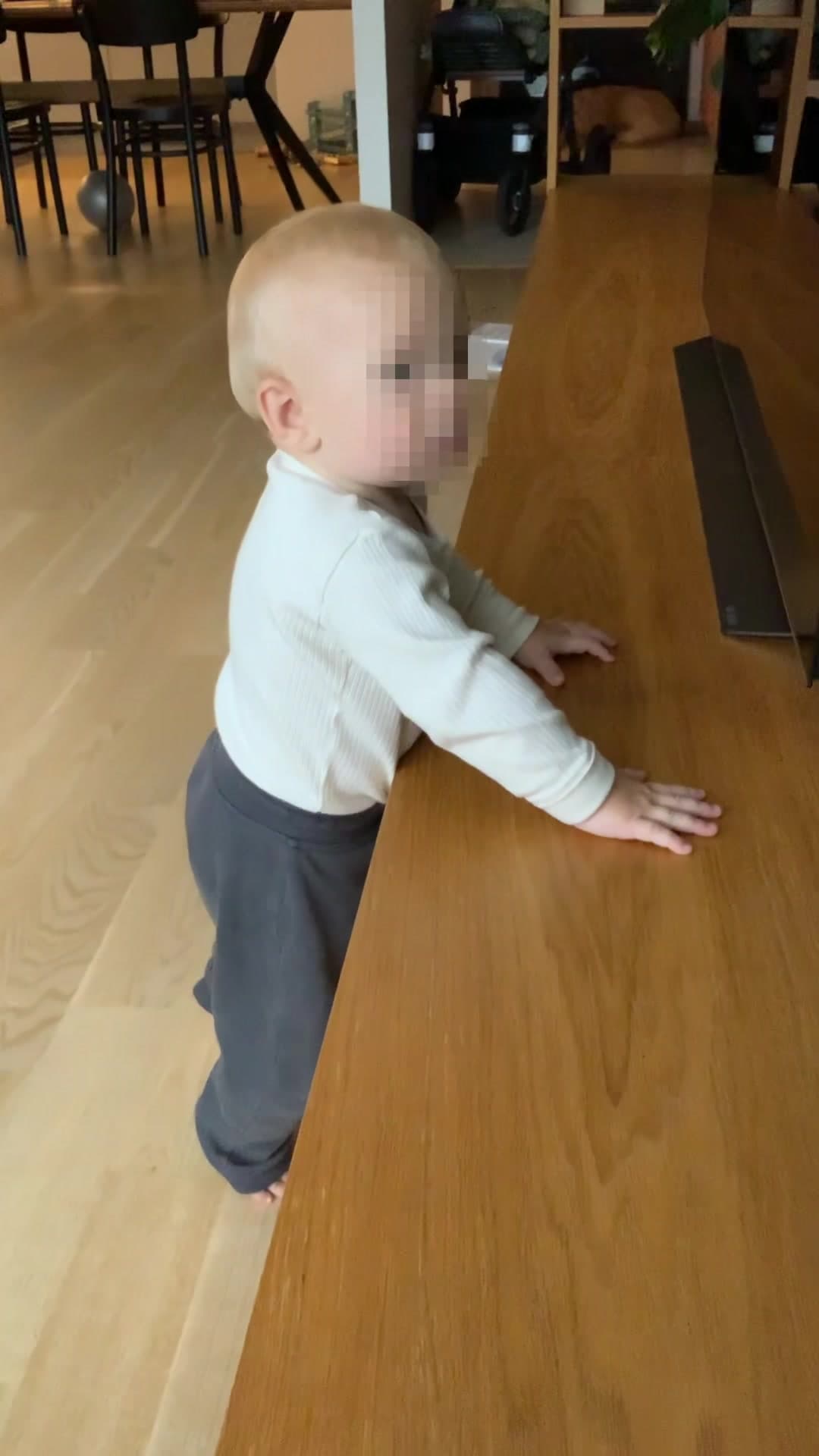
- Sideways along the sofa, both hands on
- It looks like walking with something to hold on to. The hands are doing more than holding, though. They're doing the checking, and that turns out to be the whole story.
- Standing in the space between two pieces of furniture
- They reach for the next piece, stand for a second in the gap, and sometimes take one or two steps without holding on. This is where walking is born, and you control how wide that space is.
- A step or two, then straight back down
- Two steps into open air, and then down to hands and knees, because crawling is faster and they know it. That isn't going backwards. It's a choice, and choices are what you're hoping to see.
Does that count?
It happened at brunch, at a friend's house, between two chairs. Our son had been cruising the furniture for weeks, and then he let go and took two steps into open air. I told Miriam. She did not believe me. She was sure he'd had a hand on a chair the whole time, and I stood there in someone else's kitchen asking myself the least profound question of my life: does that count?
Up close, a first step is a small experiment that happened to work. One instant of released support, inside weeks of cruising, lowering, wobbling, sitting back down, and standing up again. If you're waiting for an unmistakable moment, it may already have happened somewhere between two chairs.
They've been reading the rail
The thing to know about these months is that weeks of cruising do not teach walking, even though it looks like walking with something to hold on to. Researchers at NYU built a walkway with a gap in it and invited 22 cruising babies across. When the gap was in the handrail, the babies were shrewd: as it widened they stopped trying. When the gap was in the floor under their feet, they were oblivious, and most of them stepped straight out over it, into a padded drop with an experimenter alongside.
Weeks of cruising had taught them a lot about the rail and nothing about the floor, because while they're holding on, their hands are doing the checking. Once the hands come off, the feet have to do it, and that's the part they haven't practiced yet.
The job this month
So the job this month is not to walk them. It's to get the hands off for a moment, while there's still something to catch.
The gap is already inside how they cruise. They reach for the next piece of furniture, stand for a second in the space, and sometimes take one or two steps without holding on. That second is the moment to watch, and it's where the work of this month happens.
Walking them by the hands
Walking them around by both hands isn't harmful, and they'll ask for it. The line is who does the work. They grip your finger and drive: that's theirs. You hoist, steer and march them: that's yours.
If you remember one thing
Cruising taught their hands about the rail. It did not teach their feet about the floor. What they need is a moment with the hands off and something to catch.
Inside Baby Acrobatics
Widening the gap, on purpose
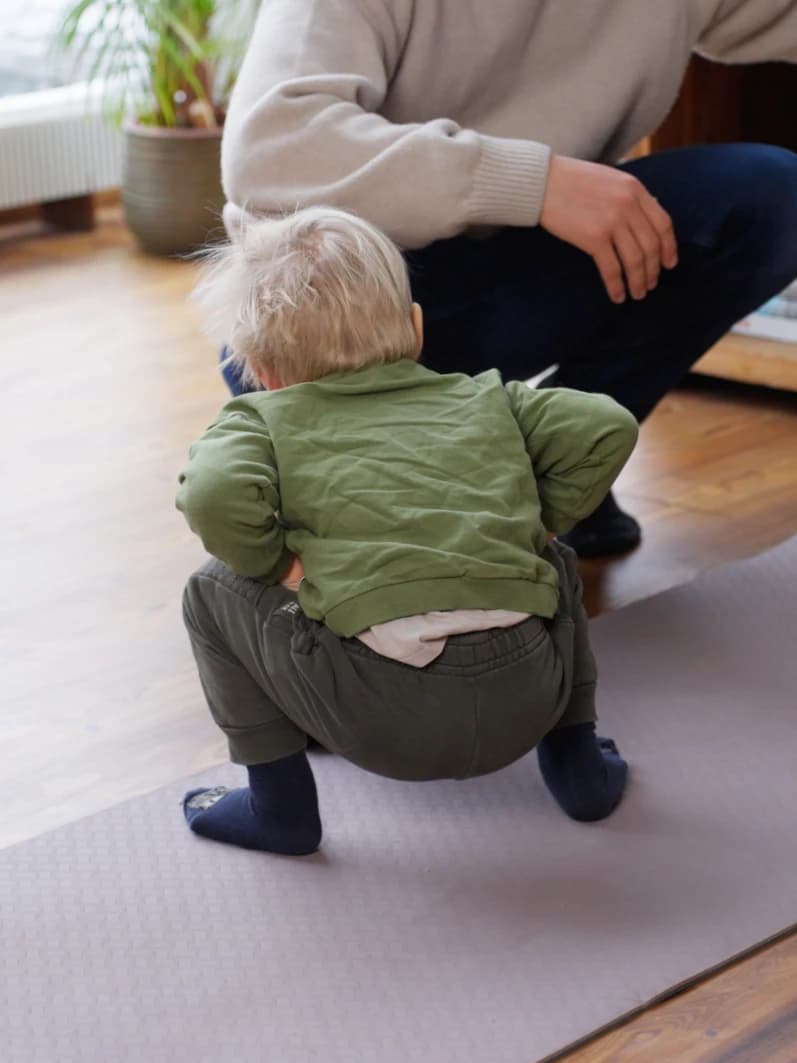
The Blueprint teaches how to widen the space between two pieces of furniture and how to tell when it's right, how to teach the way down before they get stuck standing, and the room setups that take over as the parent-led list shrinks. Movement Mastery adds the video of each one.
See what’s insideSources
- Adolph, Berger & Leo (2011): Developmental continuity? Crawling, cruising, and walking, Developmental Science 14(2)
- WHO Multicentre Growth Reference Study Group (2006): Windows of achievement for six gross motor development milestones, Acta Paediatrica 95(S450)
- Spearing, Pelletier & Drnach (eds.), Tecklin's Pediatric Physical Therapy, 6th ed. (Wolters Kluwer, 2022), on the steps taken between pieces of furniture while cruising
- Hadders-Algra & Heineman, The Infant Motor Profile (Routledge, 2021), on standing alone at twelve months
- Hadders-Algra (ed.), Early Detection and Early Intervention in Developmental Motor Disorders (Mac Keith Press, 2021), on the en bloc strategy of new standers
- US Consumer Product Safety Commission: Anchor It! Prevent furniture tip-overs