
Three reaches you'll see this month
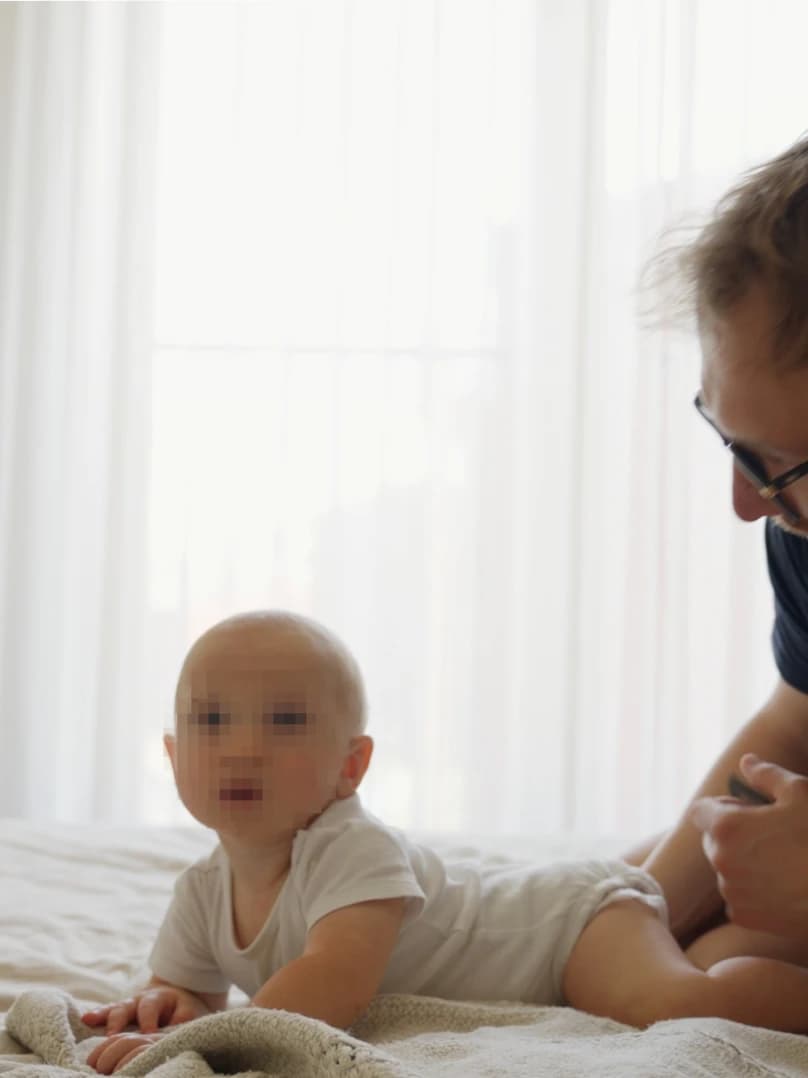
- The stare and the flapping arms
- The toy's right there. Both arms go, and nothing gets any closer to it. It looks like excitement, and it is, but it's also the first part of a reach.
- The hand that goes past
- One arm moves toward it, misses, and comes back another way. If you only look at the toy, you'll miss this one completely.
- The toy in the fist
- You put it in their hand, the fingers close around it, and they hold on for a while. It looks like the finished version of the other two. It isn't.
What our son was doing before his hand connected
For our son, reaching became a favorite activity almost as soon as he started noticing the toys we'd dangle in front of him. Watching his little hand finally connect was a moment of pure pride for all of us.
There were a lot of misses before that, and the obvious thing to do with a miss is to help. Put the toy in the hand. The fingers close around it and everybody's happy.
Why the toy in the fist tells you nothing
Here's why that tells you nothing. Right now their hand closes on whatever touches the palm on its own, and it will for another month or so. Nobody decided anything. The people who score infant movement for a living don't count a toy pushed into the fist. Neither should you.
What they do count is the reach that misses. Before about four months, grabbing on purpose mostly fails, because the hand closes on its own before they've decided anything, and the shoulder isn't steady enough to aim yet. Nothing is lost in those months. And a baby who stares at the toy and flaps both arms at it without getting anywhere is doing something with a name, prereaching, and they count that too.
Three things inside a reach
So there are three separate things inside a reach, and they don't arrive together. Noticing the toy comes first, and the flapping is what it looks like. Aiming an arm at it comes next, and it needs a steady shoulder, which is why the hand goes past for a while. Closing the hand on purpose comes last, once the hand stops closing by itself. The miss you saw this morning is the middle one turning up, and a toy in the fist skips all three.
What to do with the toy
So that's mostly what there is to do. Put the toy where they can see it and where the arm can get to it, and then don't finish the reach for them.
And that's the change this month. With a younger baby you do all the moving. Now they start doing the part they can do. Let it. Do less.
If you remember one thing
A toy you put in their hand tells you nothing, because the hand closes on its own. A reach that misses and a hand that flaps at the toy both count. Wait. Don't put it in their fist.
Inside Baby Acrobatics
The part where you start doing less
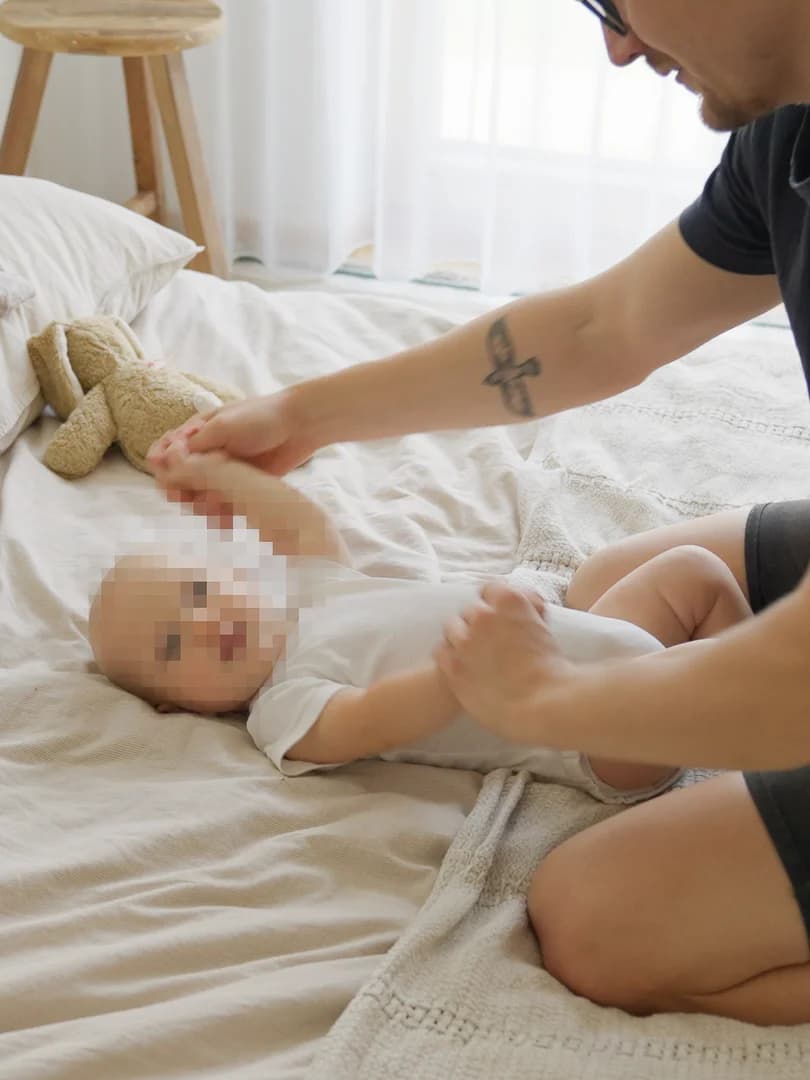
With a younger baby you do all the moving. Now they start doing the part they can, and every parent-led movement in the Blueprint is taught around exactly that: what's yours, what's theirs, and what tells you to stop. Movement Mastery adds the video of each one.
See what’s insideSources
- Spearing, Pelletier & Drnach (eds.), Tecklin's Pediatric Physical Therapy, 6th ed. (Wolters Kluwer, 2022), on the grasp reflex and shoulder stability before reaching
- Hadders-Algra & Heineman, The Infant Motor Profile (Routledge, 2021), on prereaching and on scoring only a grasp the infant makes itself
- American Academy of Pediatrics: Movement milestones, birth to 3 months
- Hadders-Algra (2018): Early human motor development, from variation to the ability to vary and adapt, Neuroscience & Biobehavioral Reviews 90