
Three ways of sitting that look the same
- Propped between cushions
- They look like a little person, and as long as they don't try to do much, they don't fall over. Nobody's hands are on them and nothing in the position is theirs to hold. This one is the photo everybody takes.
- Both hands planted on the floor
- Leaning forward on the arms. This is the one that usually starts the question, because they're clearly doing something, and also clearly stuck. The hands are working, which is exactly why they can't reach for anything.
- The hands come off the floor
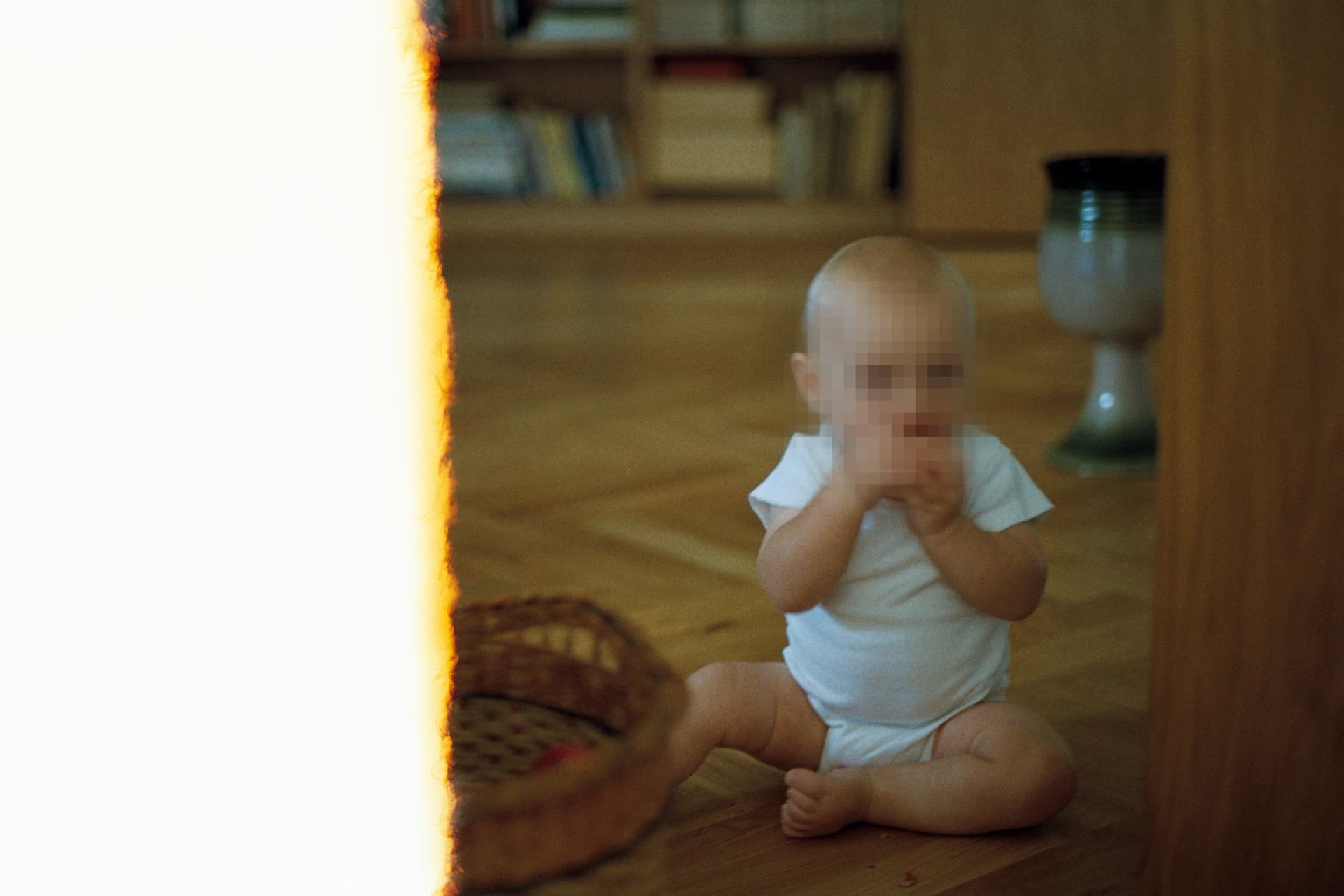
- Same baby, same floor, and the hands come off because there's something better to do with them. That's the photo.
What the baby in the cushion photo is actually doing
A baby that age, put into sitting with the legs out in a ring, can usually stay there. The base is wide and the arms are up for balance, and as long as they don't try to do much, they don't fall over. What they can't do is get there. From lying on their back or their tummy, sitting is out of reach for months yet. The people who score infant movement for a living treat those as two different skills, and their numbers are worth having. At eight months, 14 percent of babies can get themselves into sitting. At ten months, 60 percent.
So the sitting you see at six months is mostly a position someone was placed in. The part that matters, getting there, is built on the floor out of exactly what's happening now: the roll, the push up onto the arms, the weight going over to one side to reach. There's nothing to hurry. Ours was sitting on his own just before six months, and nobody had propped him to get him there.
What gets the hands free
There's one more thing from the same textbook, and it turns this from a warning into something to do. A baby propped on their hands in sitting has a problem: the hands are busy holding them up, so they can't reach for anything. What eventually gets the hands free is wanting the toy badly enough to shift the weight and let go. The want is the engine.
Placed, or arrived
I've come to a position on this, and I've said it in enough videos that I'll say it the same way here. When you position a baby in sitting, their brain is relatively passive. It's experiencing the position, but it's not solving the problem of how to get there. But when a baby figures out sitting on their own, even if it takes longer, the brain has to work out which muscles to fire, in what sequence, with what force. And that's where the learning actually happens.
It's sort of like the difference between driving somewhere and sitting in the passenger seat. You only learn the route when you're the one making decisions.
Make it possible
None of this means you do nothing. It means your job changes. Instead of propping a baby up to sit yourself, you create the situations that invite them to find the positions for themselves. Instead of making it easy, you make it possible. On the floor that means something worth wanting just past their fingertips, and then the hard part, which is not helping.
That's the picture at the top: both hands up by his face and nothing on the floor holding him there, because the rest of him is doing the holding.
If you remember one thing
A baby learns from getting into a position, not from being put in one. Sitting included, so don't prop it. Something they want just too far away, and then don't help.
Inside Baby Acrobatics
The other half of this month happens in your hands
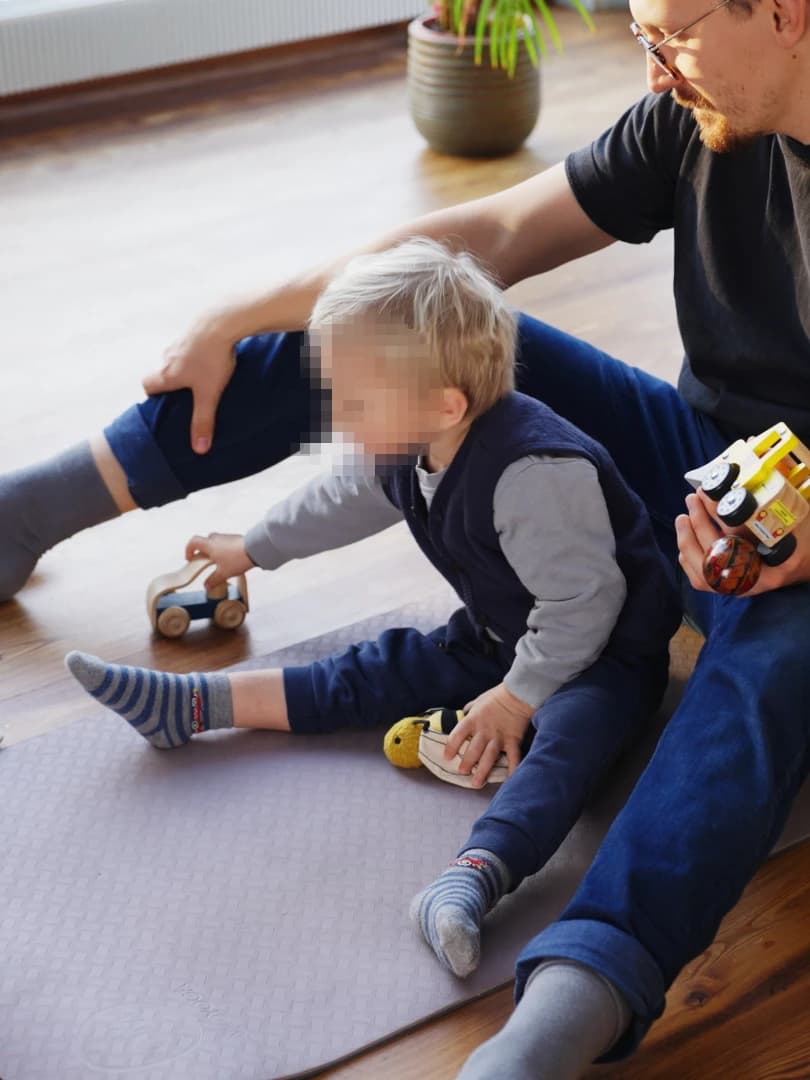
This is one of the best ages there is for the movements you do together, and they still let you pick them up and move them, which won't be true for much longer. Start the movement, then wait and see how much of it they finish. That rule runs through every movement in the Blueprint, and Movement Mastery adds the video of each one.
See what’s insideSources
- Spearing, Pelletier & Drnach (eds.), Tecklin's Pediatric Physical Therapy, 6th ed. (Wolters Kluwer, 2022), on ring sitting at six months and propping on the hands
- Hadders-Algra & Heineman, The Infant Motor Profile (Routledge, 2021), Dutch norm population for sitting and getting into sitting
- Hadders-Algra (ed.), Early Detection and Early Intervention in Developmental Motor Disorders (Mac Keith Press, 2021), on the “sitting, yet cannot be left alone” phase
- CDC: Milestones by 6 months, reaching for a toy and leaning on the hands in sitting